BPC-157 Research Overview — Sikiric Lab Research and Vial Math
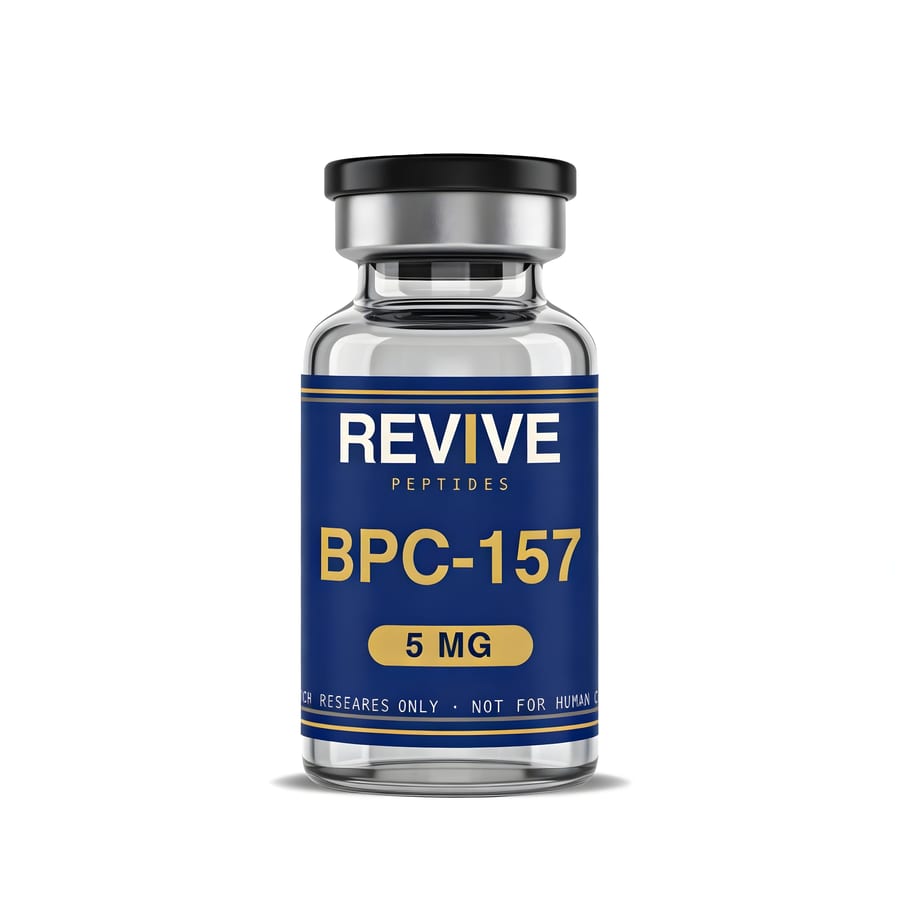
Nearly every BPC-157 article you'll find online cites a dosing number without sourcing it. This page instead covers the actual research origin of the published BPC-157 literature — the Sikiric Zagreb lab papers, the animal models studied, published mechanism findings, and how researchers reconstitute a 5 mg vial with bacteriostatic water. It does not translate animal-study amounts into a human dose, and it does not provide dosing or administration guidance.
1. Where the published research comes from — the Sikiric lab
Predrag Sikiric's research group at the University of Zagreb has published the great majority of peer-reviewed BPC-157 literature over the past 30 years — over 100 papers on the pentadecapeptide's effects on tendon, ligament, muscle, gastrointestinal tract, vascular, and nervous-system models. If you read a BPC-157 mechanism claim, the citation chain almost always leads back to a Sikiric paper.
Two dose ranges dominate the Sikiric corpus, as reported in the animal-model literature:
- 10 μg/kg — used in most acute injury and inflammation rat models
- 10 ng/kg — used in some chronic and gut-model rat studies, showing the unusual phenomenon that a 1000-fold lower dose still produced a measurable healing signal in those studies
The 10 μg/kg figure is the more commonly cited and replicated in the animal literature. REVIVE LAB UAE does not translate rat-study amounts into a human dose or provide dosing or administration guidance for any compound — that determination sits entirely with the researcher's own institutional protocol.
2. Why animal-to-human dose translation isn't provided here
Interspecies dose translation (such as the body-surface-area methods referenced in FDA preclinical guidance) is a real pharmacological discipline, but it produces an estimate, not a validated human dose — and no published human RCT exists for BPC-157 to validate any such estimate. REVIVE LAB UAE does not perform or publish this translation, and does not provide dosing or administration guidance for any compound. Researchers evaluating this question should consult their own institutional protocol and pharmacological references.
3. Route — what the Sikiric papers studied in animal models
The Sikiric lab papers used several administration routes depending on the model:
- Intraperitoneal (IP) — most common in rat trauma models; fast distribution.
- Intragastric (oral gavage) — used to demonstrate oral activity in gut and CNS models.
- Drinking water — used in chronic dosing studies.
The deeper BPC-157 research guide covers the mechanism case for each route studied in the animal literature. REVIVE LAB UAE does not provide route or administration guidance for any compound.
Oral BPC-157 — the bioavailability question
BPC-157 has a partial sequence-of-origin in gastric juice — its parent protein, BPC ("body protection compound"), was isolated from human gastric juice. This is often cited to argue oral bioavailability. The Sikiric papers showed oral activity in rats. The honest reading: oral activity in rat ≠ characterised oral bioavailability in human. Plasma pharmacokinetic data on oral BPC-157 in humans is not published.
5. Stack considerations — BPC-157 + TB-500
The most-discussed BPC-157 stack pairs it with TB-500 (thymosin beta-4 fragment). The mechanism case is reasonable: BPC-157 drives angiogenesis and local healing through nitric oxide and growth factor pathways; TB-500 promotes cell migration and actin sequestration. The two act on different molecular targets in the same broad repair process.
Researchers running stack comparisons should note that controlled trial data for the combination does not exist — the synergy hypothesis is preclinical and anecdotal. See our dedicated BPC-157 vs TB-500 comparison for the full mechanism breakdown.
6. Storage and stability
- Lyophilised vial (unreconstituted): 24+ months stable refrigerated at 2-8 °C. Tolerates room-temperature shipping windows.
- Reconstituted with bac water: 28 days at 2-8 °C is the commonly used window. Some peptide chemistry literature supports longer for shorter peptides like BPC-157 (15 amino acids), but 28 days is the conservative practice.
- Freezer: Possible for the lyophilised form; not recommended for reconstituted vials due to freeze-thaw aggregation.
- Light: Store in original box. Peptides are photosensitive.
7. UAE supply context — why HPLC verification matters
BPC-157 is one of the most commonly counterfeited peptides in the regional grey market. The 15-amino-acid sequence is straightforward to synthesise but easy to under-synthesise — incomplete coupling produces a vial that passes mass-spec by majority signal but fails purity. HPLC verification with a lot-level COA is the primary defence against this. Every BPC-157 vial shipped by REVIVE LAB UAE arrives with an accompanying certificate of analysis tied to the specific lot.
Same-day dispatch from Dubai before 4 PM, 24-hour delivery to Dubai/Abu Dhabi/Sharjah/Ajman, 24-48 hour delivery to Al Ain/RAK/Fujairah. Bacteriostatic water is available in 3 mL vials alongside as bacteriostatic water UAE.
8. The summary
- Published BPC-157 research comes from the Sikiric Zagreb lab papers — 10 μg/kg and 10 ng/kg ranges studied in rat models.
- No human dose-finding RCT exists. REVIVE LAB UAE does not translate animal-model amounts into a human dose or provide dosing or administration guidance for any compound.
- Sikiric papers studied IP, oral gavage, and drinking-water routes in animal models; oral bioavailability in humans is uncharacterised.
- Refrigerated stability after reconstitution: 28 days at 2-8 °C.
- UAE supply: REVIVE LAB UAE 5 mg vials with HPLC certificate, 24-hour delivery across the seven emirates.
References
- Sikiric P, Seiwerth S, Rucman R, et al. Stable gastric pentadecapeptide BPC 157: novel therapy in gastrointestinal tract. Curr Pharm Des. 2011;17(16):1612-32. PubMed
- Chang CH, Tsai WC, Lin MS, Hsu YH, Pang JH. The promoting effect of pentadecapeptide BPC 157 on tendon healing involves tendon outgrowth, cell survival, and cell migration. J Appl Physiol. 2011;110(3):774-80. PubMed
- Sikiric P, Seiwerth S, Rucman R, et al. Brain-gut Axis and Pentadecapeptide BPC 157: Theoretical and Practical Implications. Curr Neuropharmacol. 2016;14(8):857-865. PubMed
- Cerovecki T, Bojanic I, Brcic L, et al. Pentadecapeptide BPC 157 (PL 14736) improves ligament healing in the rat. J Orthop Res. 2010;28(9):1155-61. PubMed
- Nair AB, Jacob S. A simple practice guide for dose conversion between animals and human. J Basic Clin Pharm. 2016;7(2):27-31. PubMed