BPC-157 for Jiu-Jitsu Mat Injuries: Soft-Tissue Research Guide (Dubai, UAE 2026)
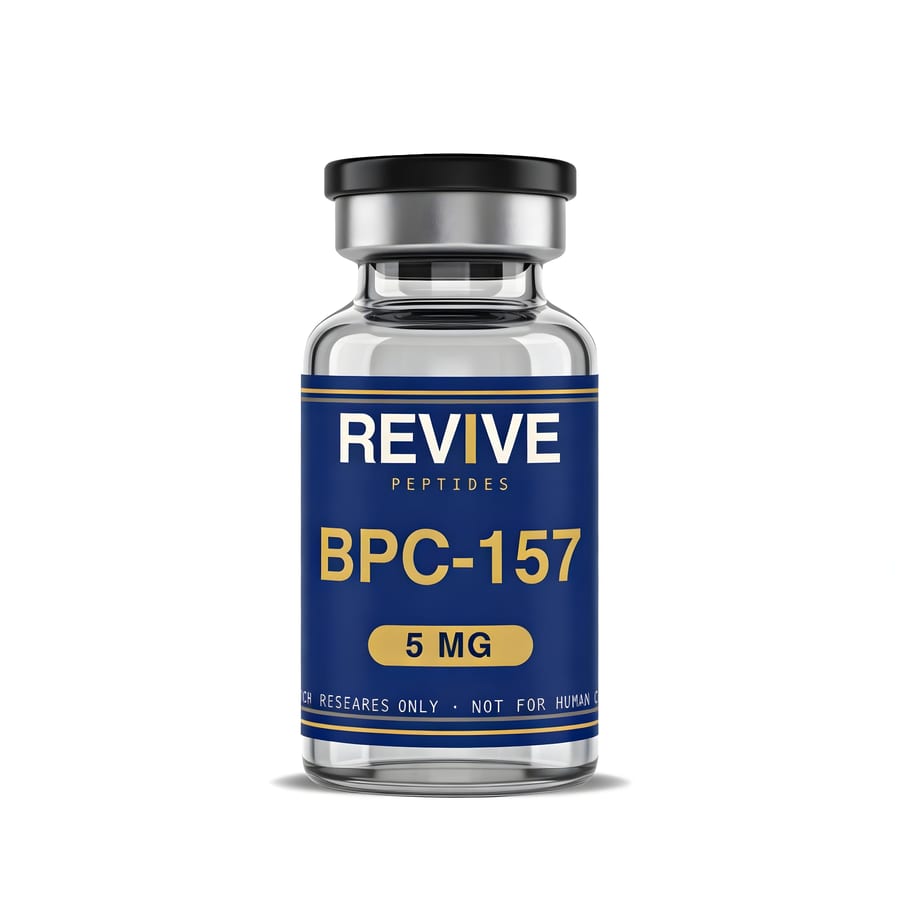
Brazilian jiu-jitsu has grown dramatically in the UAE over the past decade — there are now more than 200 active BJJ academies across Dubai, Abu Dhabi and Sharjah. With that growth comes a predictable injury burden: cumulative microtrauma to tendons, ligaments and joint capsules that does not show up on MRI but steadily erodes training capacity. Investigators studying soft-tissue recovery peptides have increasingly turned to BPC-157, drawn by the depth of the Sikiric research programme and the peptide's unusually broad mechanistic profile. This guide covers what the science actually shows, what research-context dosing looks like, and how to buy BPC-157 in the UAE from a supplier that ships cold-chain-verified vials to every emirate.
Why Jiu-Jitsu Creates Specific Injury Signatures
Unlike striking sports where acute impacts dominate the injury profile, jiu-jitsu produces a high volume of repetitive mechanical stress on connective tissue. A single two-hour training session in Dubai can involve:
- Knee ligaments — heel hook and ashi garami entries place rapid torsional load on the MCL, LCL and posterior ligament complex
- Shoulder capsule and rotator cuff — kimura, Americana, and rear-naked-choke defence create extreme abduction and internal-rotation loading
- Finger and wrist flexor tendons — grip fighting at high intensity is among the most demanding tendon-loading patterns in any combat sport
- Hip flexors and adductors — guard retention, hip escapes and explosive standing sequences generate repeated eccentric muscle loading
- Cervical spine musculature — guillotine and choke defence positions maintain isometric neck loading for extended periods
The dominant pattern is not dramatic acute rupture — it is subacute connective tissue fatigue with an inflammatory micro-environment that never fully resolves between sessions. This is the mechanistic context in which investigators have applied BPC-157 research: a peptide that modulates the transition between inflammatory and proliferative healing phases without suppressing the initial protective response.
What Is BPC-157? The Mechanism in Plain Language
BPC-157 (Body Protection Compound-157) is a synthetic pentadecapeptide — exactly 15 amino acids — derived from a sequence found in human gastric juice. It is not a hormone, not a growth factor and not a selective androgen receptor modulator. Its research profile is best understood as pleiotropic tissue-protective signalling: it does not replace a single broken pathway so much as modulate several inter-connected repair cascades simultaneously.
The key mechanistic findings from the Sikiric research programme (Sikiric et al. 2011, J Physiol Pharmacol; Sikiric et al. 2018, cumulative review) break down into four primary threads:
- Nitric oxide (NO) pathway — BPC-157 upregulates endothelial nitric oxide synthase (eNOS), supporting local vasodilation and angiogenesis at injury sites. This matters enormously for tendons and ligaments, which are intrinsically hypovascular tissue — poor blood supply is the main reason connective-tissue healing is slow.
- VEGF upregulation — investigators documented BPC-157-driven elevation of vascular endothelial growth factor in tendon healing models, accelerating capillary ingrowth into damaged collagenous matrix.
- Collagen synthesis and tenocyte proliferation — the Sikiric group observed enhanced collagen crosslinking and increased fibroblast and tenocyte activity in BPC-157-treated tissue samples, directly relevant to ligament and tendon matrix repair.
- FAK-paxillin pathway activation — BPC-157 activates focal adhesion kinase (FAK) and its downstream effector paxillin, promoting cell migration and adhesion — the early architectural steps of structural wound-healing.
What makes this profile interesting for jiu-jitsu injury research is that these mechanisms are not redundant — they address different rate-limiting steps in connective-tissue repair simultaneously. An investigator studying shoulder rotator cuff strain after a heavy kimura session is dealing with hypovascular tissue, compromised collagen matrix integrity, and blunted cellular migration. BPC-157 touches all three.
Buy BPC-157 UAE — Order Now →
The Sikiric Research Programme: What the Literature Actually Shows
Sikiric et al. 2011 (J Physiol Pharmacol)
The 2011 publication in the Journal of Physiology and Pharmacology by Sikiric and colleagues established BPC-157's multi-system modulatory profile and the foundational nitric oxide-pathway mechanisms. The Zagreb research group demonstrated consistent tissue-protective effects across multiple organ systems with a notably low adverse-effect profile in animal models, and characterised the FAK-paxillin signalling contribution to BPC-157-mediated cell migration. This paper positioned BPC-157 as a pleiotropic rather than single-target peptide — a distinction that helps explain why investigators across multiple injury types have found it relevant.
Sikiric et al. 2018 (Cumulative Review)
The 2018 comprehensive review by Sikiric et al. consolidated over two decades of BPC-157 investigations into a single reference document. For jiu-jitsu injury researchers, the most directly relevant sections cover:
- Tendon-to-bone healing models and Achilles tendon transection protocols
- Ligament repair studies including ACL and MCL models
- Muscle crush injury and eccentric-loading recovery data
- Joint protection under inflammatory challenge
- VEGF and eNOS pathway quantification in connective tissue
The 2018 review is the anchor citation in contemporary BPC-157 literature. Investigators new to the field should read this before any other source — it provides mechanistic depth, experimental context and an honest characterisation of where animal-model data does and does not translate cleanly.
Which Mat Injuries Have the Most Research Relevance?
Not every jiu-jitsu injury maps equally well to the published BPC-157 evidence base. The table below reflects where the Sikiric programme's experimental models have the tightest correspondence with BJJ injury patterns.
| Mat Injury Category | Tissue Type | BPC-157 Research Relevance |
|---|---|---|
| Knee ligament sprain (MCL, posterolateral) | Ligament (collagenous) | High — direct ligament healing models in Sikiric 2018 |
| Shoulder rotator cuff strain (supraspinatus, infraspinatus) | Tendon-to-bone interface | High — tendon-to-bone and tenocyte proliferation data |
| Finger and wrist flexor tendon overload | Flexor/extensor tendon | High — tenocyte activity and collagen crosslinking studies |
| Adductor and hip flexor muscle strain | Skeletal muscle | Moderate — muscle crush injury and eccentric-loading models |
| Joint capsule inflammation (knee, shoulder) | Synovial and capsular tissue | Moderate — anti-inflammatory and joint-protection signalling |
| Cervical paraspinal strain | Deep cervical muscle/fascia | Moderate — extrapolated from broader muscle-injury data |
The clearest research signal sits in tendon and ligament tissue — precisely the structures most vulnerable to jiu-jitsu's grip-fighting and joint-lock mechanics. Investigators studying finger tendon damage from years of guard play, or MCL laxity from heel-hook near-misses, have the most direct parallel to the published experimental work.
Order BPC-157 Dubai — 24h Delivery →
Buying BPC-157 in the UAE: What a Credible Supplier Must Provide
The UAE research peptide market has grown fast enough that quality variance is a genuine issue. Investigators searching for bpc-157 in stock UAE should evaluate suppliers against four non-negotiable criteria before ordering:
- HPLC purity certificate — third-party or in-house HPLC showing ≥98% purity on the exact lot in your shipment. A generic purity claim without a certificate is not a certificate.
- Lot-specific COA — the certificate of analysis must carry the batch or lot number matching your vial label. A document without a lot number is worthless for research provenance.
- Cold-chain dispatch — BPC-157 is stable lyophilized but should never arrive warm. A Dubai summer courier run without insulated cold-pack packaging is a quality risk that cannot be recovered from post-delivery.
- UAE-based stock — suppliers drop-shipping from Europe or North America add 7–14 days of transit with unknown cold-chain integrity, no same-day option and significant customs uncertainty. Genuine bpc-157 same day Dubai delivery is only possible from a supplier with local stock.
REVIVE LAB UAE supplies HPLC-verified, lot-COA, cold-chain dispatched BPC-157 5 mg vials across all 7 emirates. Payment options include cash on delivery Dubai and USDT TRC20 via Binance Pay — with a 5% pre-pay discount for crypto orders settled before dispatch. You can also order BPC-157 UAE directly through the product page and confirm via WhatsApp.
Delivery Coverage: All 7 Emirates
| Emirate / City | Delivery Window | Cash on Delivery | Cold-Chain Packaging |
|---|---|---|---|
| Dubai (Marina, JBR, Business Bay, JVC, DIFC, Downtown, Palm, Jumeirah) | Same-day, 4–8 hours | Yes | Yes |
| Abu Dhabi (Corniche, Yas, Saadiyat, Reem Island) | Next-day, 18–24 hours | Yes | Yes |
| Sharjah | Same-day / next-day, 8–18 hours | Yes | Yes |
| Ajman | Next-day, 18–24 hours | Yes | Yes |
| Ras Al Khaimah (RAK) | Next-day, 18–24 hours | Yes | Yes |
| Fujairah | Next-day, 24 hours | Yes | Yes |
| Umm Al Quwain (UAQ) | Next-day, 18–24 hours | Yes | Yes |
A researcher in Dubai Marina who orders before the afternoon cut-off typically receives cold-pack BPC-157 vials the same evening. Business Bay, JBR, JVC, DIFC, Palm Jumeirah, Downtown and Jumeirah all fall within the same-day window. For Abu Dhabi, Sharjah, RAK, Fujairah, Ajman and UAQ — next-day dispatch with validated cold-chain insulation is the standard. This is what bpc-157 Dubai 24h delivery looks like when the supplier is genuinely UAE-based rather than a re-labelling operation.
Buy BPC-157 UAE — Same Day Dubai →
FAQ
Can I buy BPC-157 in the UAE with same-day delivery to Dubai?
Yes. REVIVE LAB UAE dispatches bpc-157 same day Dubai for orders placed before the daily cut-off, with typical arrival windows of 4–8 hours across Dubai Marina, JBR, Business Bay, JVC, DIFC, Downtown Dubai, Palm Jumeirah and Jumeirah. All shipments use cold-chain insulated packaging and plain unbranded outer cartons as standard. Cash on delivery Dubai is available on every order with no minimum spend.
Does REVIVE LAB UAE accept crypto payment for BPC-157 orders in Dubai?
Yes. In addition to cash on delivery Dubai, REVIVE LAB UAE accepts USDT TRC20 via Binance Pay, with a 5% pre-pay discount applied to all crypto-settled orders. Transaction ID confirmation is handled via WhatsApp after payment. This makes REVIVE LAB UAE one of the few peptides UAE suppliers offering both traditional cash-on-delivery and USDT crypto pay Dubai within a single checkout flow.
- Sikiric P, Hahm KB, Brcic L, et al. Novel cytoprotective mediator, stable gastric pentadecapeptide BPC 157. Vascular recruitment and gastrointestinal tract healing. Current Pharmaceutical Design. 2018;24(18):1990–2001.
- Sikiric P, Seiwerth S, Rucman R, et al. Pentadecapeptide BPC 157's central nervous system beneficially actions and interactions with CNS disorders. J Physiol Pharmacol. 2011;62(3):249–264.