GHK-Cu After Blepharoplasty — Research Recovery Protocol for UAE Labs
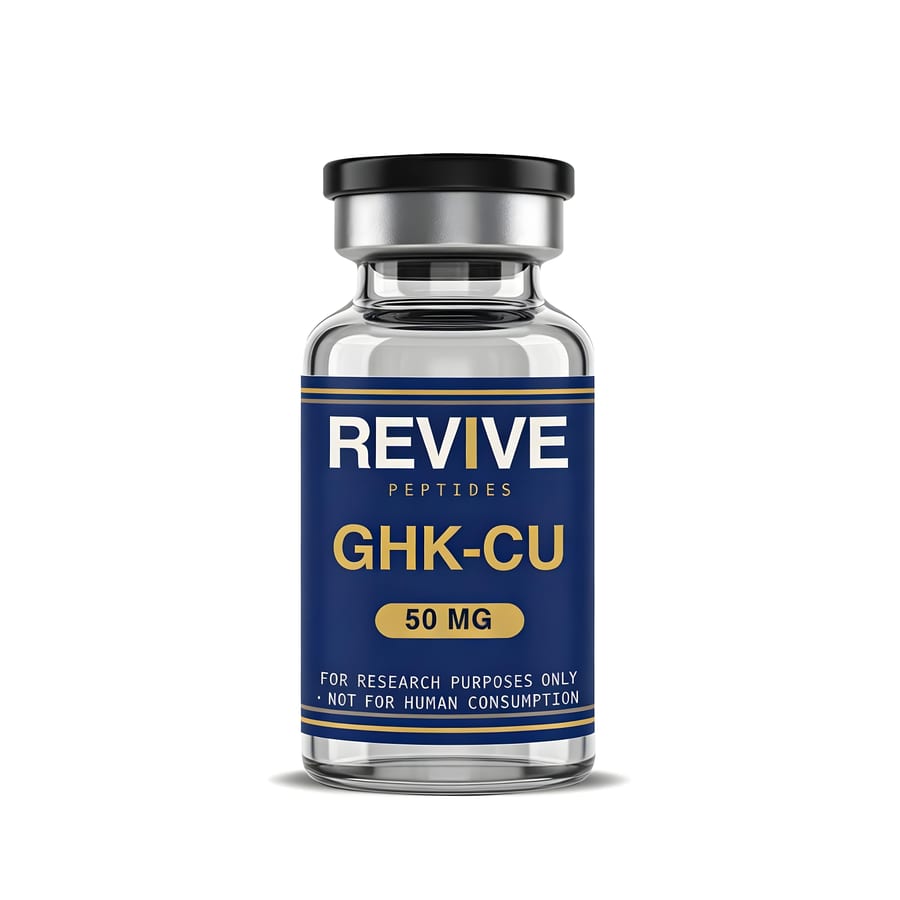
Why Post-Blepharoplasty Tissue Is a High-Value GHK-Cu Research Context
Blepharoplasty — the surgical remodelling of upper and/or lower eyelid structures — is among the most frequently performed aesthetic procedures in the Gulf. Dubai alone processes tens of thousands of eyelid procedures annually, fuelled by a combination of sun-related skin laxity, a high-income population with strong aesthetics literacy, and a dense cluster of internationally credentialled surgical clinics from DHCC to Business Bay to Jumeirah. Abu Dhabi and Sharjah contribute meaningfully to this volume. The GCC aesthetic surgery market is not a niche — it is one of the highest-concentration surgical markets on the planet.
For research teams examining tissue-remodelling peptides, this volume creates an unusually well-documented clinical backdrop to work against. Periorbital skin is the thinnest on the human body — roughly 0.5mm at the eyelid margin, compared with approximately 2mm on the forearm and 4mm on the back. That anatomical specificity makes it both the most responsive and the most demanding healing environment: fibroblast density is high, collagen turnover is faster than in truncal tissue, but the margin for visible scarring, dyspigmentation, and oedema persistence is narrow. A compound that demonstrably modulates these variables in research models commands immediate attention from any lab working adjacent to aesthetic surgery research.
GHK-Cu (glycyl-L-histidyl-L-lysine chelated to copper), a naturally occurring tripeptide that declines with age, has accumulated a substantial peer-reviewed base examining exactly these mechanisms: fibroblast recruitment, collagen synthesis, anti-inflammatory gene expression, and angiogenic support. Research teams in Dubai, Abu Dhabi, and at Academic City have increasingly oriented post-blepharoplasty wound-healing studies around GHK-Cu as a primary variable. The reliability of same-day GHK-Cu supply in UAE — now available through REVIVE LAB UAE — has removed one of the key logistical barriers that previously complicated longitudinal research designs in this space.
This article is research-context documentation only. Nothing here constitutes medical advice, clinical guidance, or treatment protocol. All GHK-Cu applications discussed are laboratory and research-use frameworks based on published literature.
What the Peer-Reviewed Literature Actually Shows
The anchor text for UAE researchers designing GHK-Cu wound-healing studies is Pickart (2018, Cosmetics), a comprehensive review of GHK-Cu's mechanisms in skin regeneration. Pickart documented GHK-Cu as a significant upregulator of collagen synthesis, a promoter of anti-oxidative gene expression, and a modulator of wound-contraction signalling cascades. Critically for periorbital research, the review identified GHK-Cu activity as tissue-responsive: effects were most pronounced in areas of active remodelling — precisely the condition that characterises post-operative periorbital skin in the days and weeks following blepharoplasty.
Campbell et al. (2012, BMC Genomics) provided a genomic resolution layer that the earlier literature lacked. Using microarray methodology, the Campbell team documented GHK-Cu modulation of over 4,000 human genes, including substantial upregulation of skin remodelling and extracellular matrix pathways alongside downregulation of inflammatory gene clusters. For post-blepharoplasty research models, this dual-directional gene modulation profile is mechanistically compelling: the research interest is precisely in minimising fibrotic response while maximising clean, organised collagen deposition — two processes that operate through partly competing gene networks, and which GHK-Cu appears to influence in the desired direction on both fronts simultaneously.
What the peer-reviewed literature does not provide — and what responsible research protocol design must account for — is a validated clinical prescription framework. No published randomised controlled trial has established a standard-of-care GHK-Cu dosing regimen for any human periorbital application. All laboratory use of GHK-Cu in this context remains in the research domain. UAE researchers designing post-blepharoplasty studies should treat the published parameter ranges as methodological anchors, not clinical targets.
Key Mechanisms Directly Relevant to Periorbital Research Models
- Fibroblast chemotaxis: GHK-Cu has demonstrated in vitro capacity to attract fibroblasts to wound sites, accelerating the scaffolding phase that immediately follows the inflammatory cascade. In thin periorbital tissue, rapid fibroblast recruitment is a particularly high-value outcome variable.
- Collagen types I and III upregulation: Multiple studies reviewed in Pickart (2018) document GHK-Cu-associated synthesis increases for the primary structural collagens involved in dermal wound repair. The relative ratio of type I to type III collagen is a commonly tracked endpoint in periorbital remodelling studies.
- Anti-inflammatory gene modulation: Campbell et al. (2012) identified downregulation of inflammatory cytokine gene clusters in GHK-Cu-exposed models. Post-blepharoplasty oedema management is one of the primary variables researchers track in the early phase window, making this mechanism particularly relevant to study design.
- Angiogenic signalling support: The Pickart (2018) review references GHK-Cu-associated promotion of capillary formation in wound-healing models. Vascular reconnection in thin periorbital tissue is a rate-limiting step in full recovery, and angiogenic modulation is a logical research target in this anatomical context.
- Melanocyte activity modulation: Some in vitro models have observed GHK-Cu-associated effects on melanocyte behaviour relevant to post-inflammatory hyperpigmentation. This is of particular interest for UAE research teams given the higher Fitzpatrick scale distribution (types III–V) prevalent across the GCC population, where post-operative dyspigmentation is a commonly documented sequela.
- Glycosaminoglycan synthesis: Pickart (2018) documents GHK-Cu effects on proteoglycan and glycosaminoglycan production, components of the extracellular matrix that contribute to tissue hydration, elasticity, and structural integrity — all measurable endpoints in periorbital remodelling studies.
Same-day dispatch to Business Bay, JBR, Marina, Downtown Dubai, Palm Jumeirah & beyond. 24h delivery to Abu Dhabi, Sharjah, and all Emirates. Cash on delivery available. Discreet packaging. Buy GHK-Cu UAE — Order Now from REVIVE LAB UAE
Topical Administration Models
Topical GHK-Cu application in periorbital research models involves a stabilised peptide formulation or freshly reconstituted solution applied directly to the target tissue. The primary advantage is localisation: compound concentration at the site of interest is high, systemic distribution is minimal, and the signal you are measuring is more cleanly attributable to local tissue effects. For periorbital wound-healing studies where the research question centres specifically on local dermal remodelling responses, topical delivery creates a tighter signal-to-noise profile.
The structural limitation is penetration depth. The periorbital epidermis, while exceptionally thin, still presents a barrier to transcutaneous delivery of larger peptide molecules without carrier systems. Published topical models reviewed in the Pickart (2018) literature have addressed this through formulation chemistry and mechanical micro-channel approaches. UAE labs with standard formulation equipment can replicate the foundational topical protocols described in the published literature; more sophisticated penetration-enhancement methodologies require additional infrastructure investment that should be factored into study design from the outset.
Week-by-Week Research Timeline: How the Biology Dictates Protocol Structure
Post-operative wound healing in periorbital tissue follows a predictable biological cascade. GHK-Cu research protocols studying this context align their intervention windows and sampling points to these phases. The following timeline reflects the wound-healing biology described in the peer-reviewed literature and how UAE-based research teams have structured their observation windows accordingly.
| Phase | Timeline | Key Biological Events | GHK-Cu Research Variable |
|---|---|---|---|
| Haemostasis | Hours 0–24 | Platelet aggregation, clot formation, vasoconstriction | Typically pre-intervention baseline window; GHK-Cu held |
| Inflammation | Days 1–5 | Cytokine cascade, neutrophil/macrophage recruitment, oedema peak | Anti-inflammatory gene modulation (Campbell 2012); some protocols begin late in this window |
| Proliferative | Days 5–21 | Fibroblast recruitment, granulation tissue, early collagen deposition | Fibroblast chemotaxis, collagen I/III upregulation (Pickart 2018); primary intervention window |
| Remodelling (early) | Weeks 3–6 | Collagen cross-linking, scar maturation, tensile strength increases | Collagen remodelling quality, anti-fibrotic signalling; secondary measurement window |
| Remodelling (late) | Weeks 6–12+ | Pigmentation normalisation, final tensile recovery, vascular stabilisation | Melanocyte modulation, angiogenic support; endpoint biomarker sampling |
Most published protocols initiate GHK-Cu intervention in the proliferative phase — approximately Day 5 to Day 7 in post-operative models — to avoid interfering with the haemostatic cascade during the earliest window. Research teams in Dubai and Abu Dhabi running 8-week studies typically divide the protocol into two 4-week observation blocks with interim biomarker sampling at Weeks 2 and 4 before the final Week 8 endpoint assessment. This structure captures both the proliferative-phase response and the early remodelling transition, which is where GHK-Cu effects on collagen organisation tend to become most measurable against controls.
One environmental factor that is specific to UAE research contexts and underacknowledged in the global literature: the extreme heat and low ambient humidity of the Gulf climate during May through September creates study-environment variables that indoor-controlled overseas research designs do not capture. Ambient temperatures in Dubai, Sharjah, Al Ain, and Abu Dhabi outdoor environments exceed 45°C for weeks at a time, which can influence both compound storage stability and biological healing rate variables in models with any outdoor-exposure component. GHK-Cu stored correctly at 2–8°C remains stable, but transit conditions between storage and application site should be documented in UAE summer-season protocols. REVIVE LAB UAE ships all orders with appropriate cold-chain packaging year-round — this is not optional in a Gulf summer context, and researchers should verify that any compound supply chain they use treats it as mandatory rather than on-request.
Sourcing GHK-Cu in UAE: Why Supply Chain Quality Determines Research Quality
This point does not receive adequate emphasis in UAE peptide research discussions: compound quality and supply reliability are not logistical background variables — they are active determinants of research reproducibility. A protocol designed around a published GHK-Cu parameter set produces meaningless data if the compound used is degraded, mislabelled, or inconsistent between batches. And in a Gulf research environment where overseas procurement has historically been the default, all three of those failure modes are more common than researchers acknowledge.
The most frequently reported supply problems among Dubai and Abu Dhabi research labs sourcing GHK-Cu internationally fall into four categories:
- Cold-chain failure in transit: Summer temperatures in UAE Customs and freight warehousing facilities regularly exceed 38–40°C. Lyophilised peptides can tolerate brief ambient-temperature exposure, but extended uncontrolled-temperature transit compromises purity in ways that are not always visible on arrival and are almost never documented by international vendors. Domestic UAE sourcing eliminates transit temperature exposure entirely.
- Purity documentation variability: Certificate of Analysis quality across international GHK-Cu vendors ranges from rigorous HPLC-documented testing to vendor-generated claims with no independent verification. REVIVE LAB UAE provides HPLC purity documentation with each batch — researchers should request and review this before any protocol begins, regardless of supplier.
- Customs clearance delays: Peptide imports entering UAE can face clearance holds that extend from days to weeks. For time-sensitive post-operative research designs where the proliferative-phase window is measured in days, a two-week customs delay is not a minor inconvenience — it invalidates the study design. REVIVE LAB UAE holds stock domestically, eliminating this risk entirely.
- Minimum order mismatch: International vendors frequently set minimum order thresholds — by weight, value, or batch size — that do not align with UAE lab-scale research needs. Over-ordering to meet minimums ties up budget, creates excess inventory management requirements, and introduces storage compliance questions. REVIVE LAB UAE's 50mg and 100mg vial format is sized for research-scale use.
Researchers based at the Palm Jumeirah, in Business Bay, at DIFC, in Sharjah's University City, or at Abu Dhabi's Masdar district who need GHK-Cu with same-day or 24h delivery and zero customs exposure have a single UAE-domestic option that currently fulfils all of those requirements: REVIVE LAB UAE. The discreet packaging UAE standard, cash on delivery Dubai option, and Binance Pay (USDT TRC20) payment track make procurement logistically clean for labs that prefer minimal paper trails on research compound orders.
Pre-Order Checklist for UAE Research Teams
- Confirm vial size against protocol volume requirements — 50mg for pilot sub-studies, 100mg for multi-week or parallel-arm designs
- Request HPLC COA for the current batch before confirming any order
- Confirm cold-chain packaging is included standard for your delivery window, particularly June through September
- Verify delivery zone — REVIVE LAB UAE covers all seven Emirates; confirm same-day vs 24h for your specific location
- Confirm payment method — WhatsApp order confirmation, cash on delivery (Dubai), and Binance Pay USDT TRC20 are all supported
- Order enough vials to cover your full protocol duration without mid-study resupply dependency
Stacking Considerations and What the Literature Does Not Support
Some UAE research teams design multi-compound protocols that include GHK-Cu alongside other peptides studied in wound-healing and tissue-repair contexts. The relevant literature base for parallel or sequential compound designs in periorbital research is thin, and researchers should be precise about what the evidence actually establishes versus what is extrapolated from individual compound data.
BPC-157 has a separate wound-healing research literature (Sikiric et al., 2018) that some labs have positioned as a complementary study track to GHK-Cu given the non-overlapping mechanism profiles. GHK-Cu operates primarily through copper-dependent fibroblast and gene-expression modulation; BPC-157 literature has focused on angiogenic and tendon-repair pathways. Mechanistic complementarity in theory does not translate to a validated combination protocol — no published study has established a safe or effective combined GHK-Cu plus BPC-157 parameter set for any periorbital or dermal application. Research teams designing combination protocols should treat each compound independently, establish single-agent baselines first, and ensure their study design documentation fully covers the combined protocol rationale and parameter justification.
The same rigour applies to any attempt to extrapolate blepharoplasty-adjacent data to other periorbital research contexts. The anatomical specificity of post-blepharoplasty tissue — its thinness, its healing timeline, its Fitzpatrick-variable pigmentation responses — means that findings from this context should not be casually generalised to other facial tissue research models without independent protocol justification. The GHK-Cu literature is specific enough about tissue-context dependency (Pickart, 2018) that researchers should treat each anatomical site as a distinct study design question.
REVIVE LAB UAE supplies GHK-Cu, BPC-157, and a full range of research peptides. For UAE labs running multi-compound research designs that require coordinated dispatch of multiple compounds — to Dubai, Abu Dhabi, Sharjah, or elsewhere in the Emirates — WhatsApp enquiries for bulk research supply are handled directly. Single-vial orders for immediate protocol needs can be placed through the product pages with same-day delivery.
FAQ
Can I buy GHK-Cu in UAE with same-day delivery to Dubai?
Yes. REVIVE LAB UAE stocks GHK-Cu in 50mg and 100mg lyophilised vials with same-day dispatch to Dubai addresses including JBR, Business Bay, Marina, Downtown, and the Palm. Orders placed before 4 PM receive same-day Dubai dispatch. Next-day delivery covers Abu Dhabi, Sharjah, Ajman, Ras Al Khaimah, and the Northern Emirates. Cash on delivery is available for Dubai orders. All parcels are shipped in discreet packaging with no product identification on the exterior — standard for all REVIVE LAB UAE orders.
What vial sizes of GHK-Cu does REVIVE LAB UAE stock?
REVIVE LAB UAE currently stocks GHK-Cu in 50mg and 100mg lyophilised vials. Both sizes are research-grade with HPLC purity documentation available per batch on request. The 50mg vial is suited to pilot sub-studies or initial protocol validation runs. The 100mg vial is preferred by research teams running extended multi-week protocols or parallel-arm study designs, where eliminating mid-protocol resupply dependency is a data-quality imperative. Both sizes are in stock and available for immediate dispatch across UAE.
What research dose range is referenced in GHK-Cu periorbital wound-healing studies?
(2012, BMC Genomics). These are research-model parameters, not clinical prescriptions. All referenced applications are strictly research-use only and do not constitute medical advice. Protocol design should be grounded in the peer-reviewed literature and governed by appropriate institutional ethical oversight.
- Pickart, L. (2018). The human tri-peptide GHK and tissue remodeling. Cosmetics, 5(2), 29.
- Campbell, J. D., et al. (2012). GHK gene expression modulation — microarray analysis of human gene networks. BMC Genomics, 13.
- Sikiric, P., et al. (2018). BPC-157 wound healing and tissue repair: a review. Current Pharmaceutical Design, 24(18). [Referenced for BPC-157 mechanism comparison context only; not a GHK-Cu source.]
50mg & 100mg vials · Same-day delivery Dubai (JBR, Business Bay, Marina, Downtown, Palm) · 24h dispatch Abu Dhabi & Sharjah · Cash on delivery · Discreet packaging · HPLC COA available Buy GHK-Cu UAE — Same-Day Dubai Delivery from REVIVE LAB UAE