Tesamorelin Belly Button Rash Management — UAE Researcher Guide
What the Published Trials Document About Tesamorelin ISRs
The landmark Falutz et al. 2007 NEJM publication — the foundational phase III study establishing tesamorelin's visceral fat-reduction profile — documented injection site erythema and pruritus among the most commonly observed adverse events in the active treatment arm compared to placebo. The continuation study published by Falutz et al. in 2010 in NEJM extended this observation across a longer timeline and found that most ISRs were mild-to-moderate in severity and did not lead to protocol discontinuation in the majority of subjects. Importantly, the continuation data noted that ISR incidence tended to decline over weeks, a pattern consistent with repeated-injection tolerance developing at rotated sites.
Stanley et al.'s 2014 JAMA publication on tesamorelin and visceral adiposity in the HIV-affected population catalogued injection site reactions at a higher incidence in the active group versus placebo, with erythema, pain, urticaria, and induration each appearing in the safety summary tables. The 2019 Lancet HIV follow-up by Stanley et al. on long-term tesamorelin use confirmed the same attenuation pattern seen in the Falutz continuation data — ISRs clustering in the early weeks of a protocol and diminishing with continued structured rotation.
The collective signal from four major published trials is consistent: periumbilical ISRs are common, predominantly localised, and manageable without discontinuation when technique and rotation protocols are applied from day one. What the trial publications do not provide is operational protocol-level detail — the specific technique adjustments, environmental modifications, and response algorithms that research teams need. That is what the remainder of this guide addresses.
ISR Profile: Reaction Types and Typical Timelines
Root Causes: Why the Belly Button Zone Reacts More Aggressively
Understanding these mechanisms allows you to intervene at the causal level rather than simply managing symptoms after the fact.
Anatomical Constraint
The skin immediately surrounding the navel is tethered to the underlying umbilical fascia — a fibrous structure that anchors the navel to the linea alba. This tethering creates a zone of relative tissue immobility compared to the lateral thigh or gluteal region, where adipose layers can redistribute displaced volume freely. The navel itself is also a convergence point for multiple cutaneous sensory nerve branches, making the immediate 2 cm radius acutely sensitive to both mechanical and chemical stimulation. This anatomy is fixed — you work around it by respecting the 2 cm exclusion zone around the navel rim that every sensible rotation protocol should enforce.
Peptide Chemistry at the Depot Site
Tesamorelin's trans-3-hexenoic acid conjugate renders the molecule amphiphilic — it possesses both hydrophilic and hydrophobic segments. This is a physicochemical mechanism, not a classical immunological allergy. It explains why ISRs can persist in subjects with no prior history of peptide sensitivity, and why purity and intact molecular structure in the source vial matter more than many researchers appreciate: degradation products from improper storage generate far more aggressive local reactions than intact, research-grade tesamorelin from a properly handled vial.
Gulf Climate Variables
This is the factor least addressed in published tesamorelin literature because the pivotal trials were conducted in climate-controlled North American and European settings. In the UAE — whether your research operation is based in a facility in Business Bay, a home lab in JBR, a university unit in Sharjah, or a clinic in Abu Dhabi — ambient temperatures between 38°C and 48°C during summer mean that a reconstituted tesamorelin solution left unmanaged between refrigerator and injection can warm from 4°C to 25°C or above within minutes. The physical temperature of the injected solution is an independent driver of ISR severity. A warmer solution produces a faster and more pronounced mast cell response at the depot site. Cold-chain management from storage through the injection moment is not optional in the UAE context — it is a primary ISR control variable that Northern Hemisphere researchers largely do not need to account for.
Same-day dispatch from Dubai. Cold-chain packaging standard across all orders. Discreet delivery — Dubai, Abu Dhabi, Sharjah, and all emirates.
Buy Tesamorelin UAE — Same-Day Dubai Dispatch from REVIVE LAB UAE
Prevention Protocol: Pre-Injection Checklist for UAE Researchers
ISR prevention is consistently more effective than ISR management. The following checklist synthesises technique elements drawn from the published trial protocols and adapts them for UAE operating conditions. Apply every item before the first injection of any tesamorelin research protocol — not after the first rash presents.
Cold Chain and Solution Temperature
- Store reconstituted tesamorelin at 2–8°C. Never freeze. Freezing denatures the peptide structure and generates fragments that produce disproportionately aggressive ISRs.
- In UAE summer months, remove the filled syringe from refrigeration no more than 3–5 minutes before injection. Pre-drawing and leaving on a bench while you prepare the injection site is a common error that materially increases ISR risk in the Gulf climate.
- If your workspace ambient temperature exceeds 30°C, hold the syringe barrel briefly against a chilled (not frozen) surface or wrap for 20–30 seconds. Bringing solution temperature from 22°C down to 8–10°C at the point of injection measurably reduces the local histamine cascade.
- Confirm cold-pack integrity on receipt from REVIVE LAB UAE before reconstituting. Vials dispatched across Dubai, the Palm, DXB corridor, Sharjah, and Abu Dhabi routes are cold-packed as standard — verify the pack is still cold before you sign off the delivery.
Site Preparation
- Enforce a hard exclusion zone: do not inject within 2 cm of the navel rim itself. The tethered, nervy tissue of the immediate periumbilical ring is where the worst ISRs originate. Target the arc between 2 and 5 cm from the navel edge instead.
- Never inject into hardened or visibly post-reaction tissue. Visible induration indicates an active depot inflammatory response — that site needs a minimum 14-day rest before re-use.
Reconstitution Technique
- Use sterile water for injection (WFI) as the reconstitution diluent. Bacteriostatic water preserved with benzyl alcohol can amplify ISR intensity in subjects with reactive periumbilical skin — WFI is the safer default for initial protocol runs.
- Reconstitute by directing the diluent stream against the vial wall rather than directly onto the lyophilised cake. Roll the vial gently to mix — never shake. Shaking generates mechanical stress on the peptide backbone and introduces small particulate aggregates that increase tissue reactivity at the depot.
- Allow the reconstituted solution to equilibrate at room temperature for 90–120 seconds before drawing into the syringe. Drawing immediately from a just-reconstituted vial can incorporate undissolved particulate.
Active Management: Responding to Established Periumbilical Rash
When erythema or pruritus presents despite prevention measures, the research team's response in the first 60 minutes determines whether the reaction resolves cleanly or progresses into persistent induration that takes weeks to fully disperse. The framework below is consistent with how ISR events were monitored and managed in the published tesamorelin continuation trial protocols.
Immediate Response — First 60 Minutes
- Apply a cold compress (gel pack wrapped in a thin cloth, never bare ice) to the injection site for 10–15 minutes. Cold limits histamine release rate and restricts the radius of erythema expansion.
- Do not apply topical steroids within the first 30 minutes. Allow the initial vascular response to fully declare before characterising the reaction type. Urticaria, flat erythema, and developing induration each warrant different follow-on responses — premature topical steroid application obscures this differentiation.
- Document: photograph the site if possible, note the erythema diameter in centimetres, record presence or absence of whealing, note the subject-reported itch intensity on a 1–10 scale, and log injection conditions (vial lot number, estimated solution temperature, needle gauge, zone used). This data is valuable for protocol optimisation across subsequent subjects.
Hours 1–24
- If erythema persists beyond 4 hours or exceeds 5 cm in diameter, classify the site as high-reactivity and exclude it from the active rotation pool for the remainder of the current protocol cycle. Continuing to use it will escalate to induration.
- For pruritus persisting beyond 1–2 hours, topical antihistamine cream applied to the site at hour 1 consistently reduces itch duration in research-setting observation — this is a protocol management note, not a medical treatment recommendation.
- For developing induration (a firm nodule palpable at the injection depot), begin warm compress application — 10 minutes twice daily — from hour 24 onward. Gentle heat promotes lymphatic dispersal of the inflammatory depot and shortens nodule persistence by several days compared to no intervention.
Escalation Signals — Flag and Halt Thresholds
| Observation | Protocol Action |
|---|---|
| Erythema expanding beyond 8 cm radius | Document; pause further periumbilical injections pending full site assessment |
| Whealing spreading outside the injection quadrant | Flag as potential systemic histamine event; assess for any additional systemic signs |
| Induration persisting beyond 3 weeks at same site | Retire that site permanently from the rotation; transition to thigh or gluteal alternative |
| Any systemic sign (respiratory, widespread flushing, cardiovascular) | Immediate protocol halt; complete adverse event documentation; escalate as per research ethics protocol |
Site Rotation Map for Extended Tesamorelin Research Protocols
Systematic rotation is the highest-leverage ISR prevention tool available, more impactful than any single technique adjustment. The periumbilical region, when managed as a structured grid of discrete micro-sites rather than a single undifferentiated injection zone, can support protocols running across many weeks without accumulating the induration burden that produces the most severe and persistent ISR presentations.
The practical framework is an eight-zone clock-face grid centred on the navel, with each zone positioned at a distance of 3–4 cm from the navel rim: positions at 12, 1:30, 3, 4:30, 6, 7:30, 9, and 10:30 on the clock. Using each zone on an eight-day rotation cycle gives every individual site a full seven days of rest between injections. This rest interval aligns with the inflammatory resolution kinetics implied by the tesamorelin continuation trial data, where ISR incidence declined markedly after weeks 4–6 in subjects following structured protocols — exactly the timeline you would expect if each site was clearing its local inflammatory response between uses.
When the periumbilical region shows persistent reactivity after six weeks of eight-zone rotation — a scenario that affects a meaningful minority of research subjects — the lateral thigh and dorsolateral gluteal zone are the established fallback sub-q sites. These locations have lower mast cell density and no connective tissue tethering equivalent to the umbilical fascia, and they generate fewer and milder ISRs across comparable protocols. The absorption profile may differ slightly from the periumbilical standard, which should be noted in protocol documentation as a site-change variable.
Eight-Zone Periumbilical Rotation Reference
| Day | Zone | Clock Position | Anatomical Description |
|---|---|---|---|
| Day 1 | A | 12:00 | Superior midline, 3–4 cm above navel |
| Day 2 | B | 3:00 | Right lateral, 3–4 cm from navel rim |
| Day 3 | C | 6:00 | Inferior midline, 3–4 cm below navel |
| Day 4 | D | 9:00 | Left lateral, 3–4 cm from navel rim |
| Day 5 | E | 1:30 | Right superior oblique |
| Day 6 | F | 4:30 | Right inferior oblique |
| Day 7 | G | 7:30 | Left inferior oblique |
| Day 8 | H | 10:30 | Left superior oblique |
On Day 9, return to Zone A. This cycle gives every site at least seven full days between injections. Research teams running higher-frequency GHRH analog dosing protocols should extend to a 12- or 16-zone system, or incorporate bilateral thigh sites from the start, to maintain equivalent rest intervals.
Vial Quality and Its Direct Effect on ISR Rates
Researchers who run otherwise identical protocols across different tesamorelin sources frequently report meaningfully different ISR rates. This is not placebo effect or confirmation bias — it is peptide degradation chemistry. Tesamorelin sourced from suppliers without rigorous cold-chain handling generates two primary degradation products: oxidised methionine at position 27 of the peptide chain and deamidated asparagine fragments. Both degradation products are immunologically and chemically more reactive at tissue depots than intact tesamorelin. They produce faster-onset erythema, wider reaction radius, and more persistent induration than equivalent volumes of research-grade intact peptide.
If your protocol is running ISR rates that exceed what the published trial data would predict even after implementing the technique protocol in this guide, the vial should be the first variable you audit. Were cold packs intact on delivery? Was the vial stored at the correct temperature from the moment of reconstitution? Was the lyophilised cake still visually intact and white when you reconstituted it, or was there yellowing or collapse suggesting prior temperature excursion? Any one of these is enough to materially raise the ISR burden in your protocol.
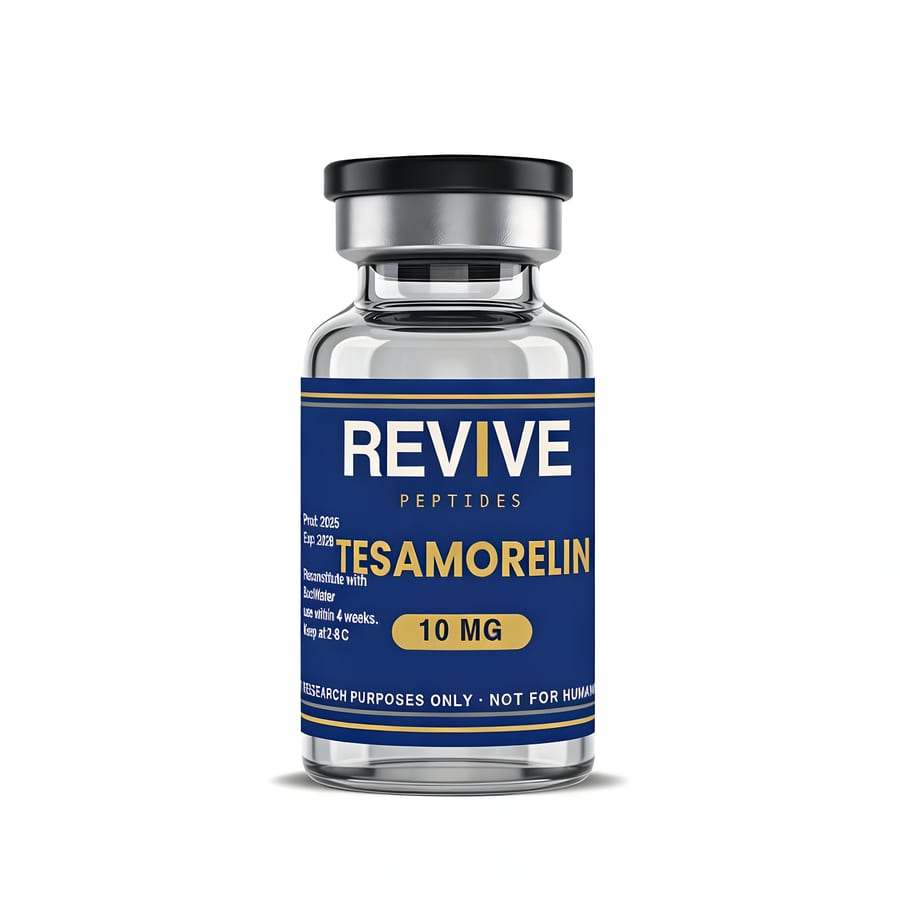
Researchers across Dubai — whether you are operating from a lab in Business Bay, a facility near DXB, a private research setup in Marina or JBR, or working across the water in Palm Jumeirah — have access to tesamorelin 5mg and 10mg vials from REVIVE LAB UAE with cold-chain packaging handled as standard from Dubai dispatch through delivery. The same applies to Abu Dhabi and Sharjah researchers: 24h delivery with cold-pack insulation for the Gulf climate, discreet outer packaging with no identifiable branding or product description visible externally. Cash on delivery is accepted for Dubai metro orders; Binance Pay via USDT TRC20 covers researchers who prefer crypto settlement and receive a 5% pre-pay discount under that channel.
5mg and 10mg research vials. In stock today. Same-day Dubai delivery, 24h Abu Dhabi and Sharjah. Discreet cold-chain packaging on every order.
Order Tesamorelin UAE — In Stock Now at REVIVE LAB UAE
FAQ
Can I buy tesamorelin in UAE with same-day delivery?
Yes. REVIVE LAB UAE stocks tesamorelin 5mg and 10mg vials in Dubai with same-day dispatch available for orders confirmed before the daily cut-off. Delivery coverage includes Dubai (JBR, Marina, Business Bay, Palm Jumeirah, DXB corridor), Abu Dhabi, Sharjah, and all remaining emirates. Packaging is discreet — no branding or product description on outer packaging — and cold-chain compliant for Gulf climate conditions. Cash on delivery is available for Dubai metro area. Binance Pay (USDT TRC20) is accepted with a 5% pre-pay discount. Visit /buy-tesamorelin-uae/ for live stock status and current pricing.
- Falutz J, Allas S, Blot K, et al. Metabolic effects of a growth hormone-releasing factor in patients with HIV. N Engl J Med. 2007;357(23):2359–2370.
- Falutz J, Mamputu JC, Potvin D, et al. Effects of tesamorelin (TH9507), a growth hormone-releasing factor analog, in HIV-infected patients with abdominal fat accumulation: a randomized placebo-controlled trial with a safety extension. N Engl J Med. 2010;363(22):2105–2116.
- Stanley TL, Falutz J, Mamputu JC, et al. Effect of tesamorelin on visceral fat and liver fat in HIV-infected patients with abdominal fat accumulation. JAMA. 2014;312(4):380–389.
- Stanley TL, Fourman LT, Feldpausch MN, et al. Effects of tesamorelin on non-alcoholic fatty liver disease in HIV: a randomised, double-blind, multicentre trial. Lancet HIV. 2019;6(4):e247–e256.
REVIVE LAB UAE — the peptides Dubai and Abu Dhabi researchers rely on for consistent cold-chain, in-stock availability, and discreet delivery. Tesamorelin 5mg & 10mg vials dispatched same day from Dubai.
Buy Tesamorelin UAE — REVIVE LAB UAE