Tesamorelin Maintenance Microdose Protocol UAE: The Researcher's Operational Guide for 2026
Why Tesamorelin Maintenance Research Is Gaining Momentum in UAE Labs
Tesamorelin is not a peptide you run once and shelve. Among GHRH analogs attracting serious research interest in the Gulf — and there is now a meaningful cluster of independent research programmes operating out of Dubai, Abu Dhabi, and increasingly Sharjah — tesamorelin stands apart because its mechanistic data spans a genuine longitudinal arc. The published dataset goes beyond single-phase snapshots: Falutz et al. (2007) in the New England Journal of Medicine established the initial active-phase parameters; Falutz et al. (2010), also in the NEJM, covered the continuation phase; Stanley et al. (2014) in JAMA extended the visceral-fat endpoint analysis; and Stanley et al. (2019) in Lancet HIV published the longest-horizon tesamorelin dataset available in the peer-reviewed literature. That four-paper backbone is unusually solid for a research peptide, and it is precisely why serious investigators in the UAE are not treating tesamorelin as a one-and-done compound.
The concept of a "maintenance microdose" emerges directly from that longitudinal literature. The core research question is straightforward: once the primary observation window closes, what is the minimum quantity that sustains the documented endpoints, and across what time horizon? UAE-based researchers working on metabolic and endocrine-adjacent protocols are actively designing experiments around this question — and they need reliable, in-stock supply to execute. That operational gap is what this guide addresses.
Peptide research supply chains in the UAE have historically been fragmented. Orders routed through European or North American suppliers carry 10 to 14-day cold-chain transit windows — a genuine problem for aqueous reconstitution timing, and for researchers who cannot afford to batch-order several months of supply upfront. REVIVE LAB UAE was built to close that gap: same-day dispatch within Dubai (including the Marina, JBR, Business Bay, DIFC, and Jumeirah corridors), 24-hour delivery to Abu Dhabi and Sharjah, cash on delivery accepted, and discreet packaging as a default rather than an upsell.
Reconstitution Volume and Concentration Targeting
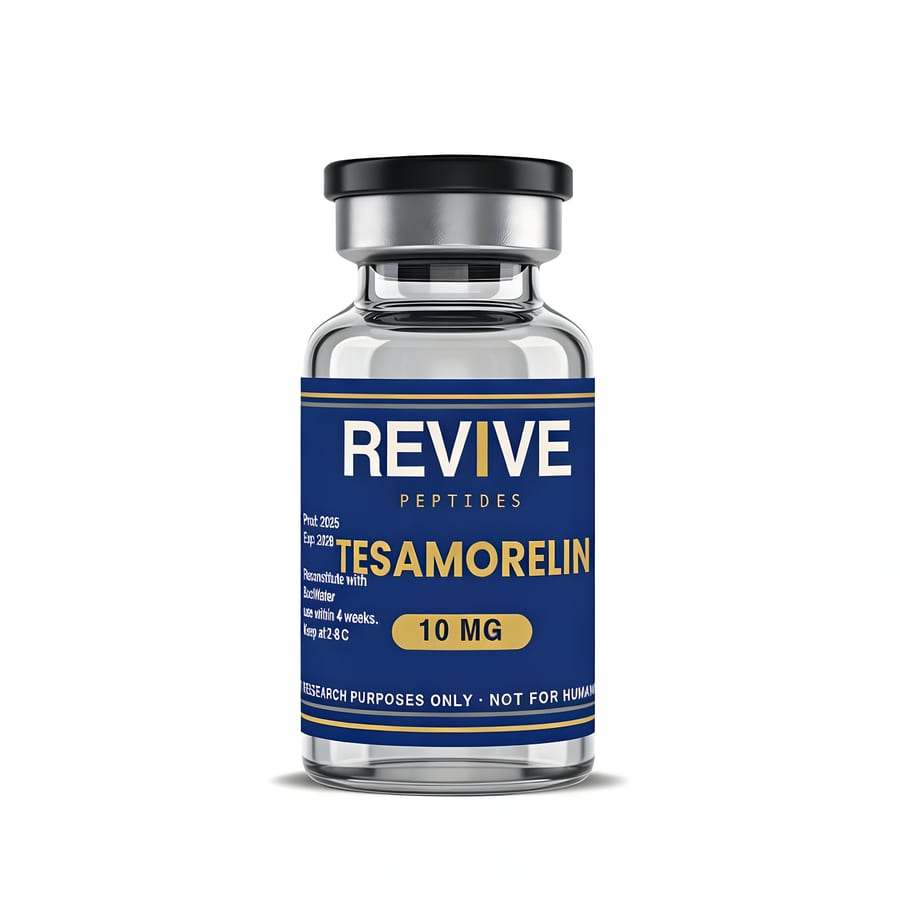
Reconstitution decisions are consequential for maintenance microdose research because they determine measurement precision at the administration stage. A 5mg vial reconstituted with 2.5mL bacteriostatic water yields a 2mg/mL solution. A 10mg vial reconstituted with 5mL of bacteriostatic water yields the same 2mg/mL concentration — which is operationally convenient: 1mg doses are drawn at exactly 0.5mL, and the arithmetic stays clean across both vial sizes regardless of which format your current batch uses.
UAE researchers specifically: ambient temperature is a variable you cannot ignore. REVIVE LAB UAE ships cold-chain with insulated packaging and gel ice packs; your lab storage should be 2 to 8 degrees Celsius from the moment of reconstitution, and that standard is harder to maintain passively in a Dubai summer than in a climate-controlled European lab.
5mg & 10mg research vials. Same-day dispatch Dubai (Marina, JBR, Business Bay). 24h delivery Abu Dhabi & Sharjah. Discreet packaging. Cash on delivery available. CoA with every order.
Buy Tesamorelin UAE — Same-Day Dubai Dispatch from REVIVE LAB UAE
Designing a Tesamorelin Maintenance Microdose Research Schedule
Research schedule design for a maintenance microdose protocol involves three interlocking variables: quantity per observation point, administration frequency, and total observation window length. The table below maps supply implications across common maintenance research designs using REVIVE LAB UAE's available vial formats. All quantities are stated in a research-use context only.
| Research Design | Qty / Observation Point | Frequency | Vials Required / 30-Day Window | Optimal Vial Format |
|---|---|---|---|---|
| Active Phase (Published Reference) | 2mg | Daily | 6 × 10mg or 12 × 5mg | 10mg |
| Maintenance Microdose A | 1mg | Daily | 3 × 10mg or 6 × 5mg | 10mg |
| Maintenance Microdose B | 1mg | Alternate Day | 2 × 10mg or 3 × 5mg | 10mg |
| Maintenance Microdose C | 1mg | 5 days on / 2 days off | 3 × 10mg (approx.) | 10mg |
Researchers designing longer observation windows — the twelve-week or extended maintenance horizon that Stanley et al. (2019) best approximates in the published literature — should calculate supply requirements for 84 days, not 30. Ordering in a single batch from REVIVE LAB UAE locks in batch consistency: all vials from the same production run carry identical purity certificates and potency references, which eliminates inter-batch variance as a confounding variable over your maintenance window.
One scheduling consideration specific to UAE research contexts: national holidays and the Ramadan observation period affect same-day delivery windows across the country. Building a two-week supply buffer is standard operating procedure for UAE-based researchers who cannot afford a mid-protocol gap. REVIVE LAB UAE maintains UAE warehouse stock year-round including through Eid al-Fitr, Eid al-Adha, and UAE National Day periods — but pre-ordering ahead of public holiday clusters is always the operationally cleaner choice. Researchers based on the Palm, in Abu Dhabi, or in Sharjah may also find that ordering a larger batch upfront removes the logistical overhead of weekly reorder cycles entirely.
Storage and Handling in UAE Climate Conditions
Dubai's ambient temperature regularly exceeds 42 to 45 degrees Celsius in June and July. Abu Dhabi, Sharjah, and the Palm are not meaningfully cooler. This is not an academic concern: peptide degradation is temperature-sensitive, and lyophilised tesamorelin — the format in which research vials are supplied — while stable at room temperature in sealed, unreconstituted form, must be treated as temperature-sensitive throughout the entire supply chain from warehouse to lab bench.
REVIVE LAB UAE ships all peptide orders in insulated packaging with gel ice packs sized to the specific UAE transit window. For same-day deliveries within the Dubai metro area — DXB, Marina, JBR, Business Bay, DIFC — the sub-four-hour delivery window means minimal thermal exposure between dispatch and lab receipt. For Abu Dhabi and Sharjah on the 24-hour schedule, packaging is dimensioned to maintain safe temperatures across that longer transit period.
Lab Storage Protocol Checklist
- Unreconstituted vials: Store at 2 to 8 degrees Celsius in a standard laboratory refrigerator. Do not freeze. Keep away from direct light. Label with receipt date.
- Post-reconstitution: Store at 2 to 8 degrees Celsius. Use within 28 days of reconstitution. Label each vial with reconstitution date, time, and resulting concentration.
- During work session: Remove vial from refrigerator and allow 4 to 5 minutes to approach room temperature before drawing. Return to refrigeration immediately after use. In a UAE lab environment where ambient temperature may substantially exceed the refrigerator's setpoint, minimise all time outside cold storage.
- Do not: Freeze reconstituted vials. Expose any vial to direct sunlight. Use vortex mixing during reconstitution — gentle swirling only until the lyophilised cake dissolves.
- Power contingency: UAE labs in older Sharjah or Ajman facilities should have a documented cold-chain continuity protocol. Peptides held above 8 degrees Celsius for extended periods without refrigeration should be documented and conservatively considered compromised.
A simple USB temperature logger placed inside your peptide refrigerator costs under AED 80 and creates an audit trail for any maintenance protocol spanning multiple weeks. If you are running an eight or twelve-week maintenance observation study with research data you intend to document formally, temperature logging is standard practice — not optional.
Tesamorelin vs. Other GHRH-Class Analogs Available in UAE
UAE researchers with access to the broader peptides-UAE supply landscape have several GHRH-class and GH-secretagogue options available. Understanding where tesamorelin sits in that landscape is useful when designing a maintenance protocol, particularly for researchers considering compound sequencing across active and maintenance phases.
| Compound | Class | Peer-Reviewed Basis | Research Qty Range | Maintenance Literature? |
|---|---|---|---|---|
| CJC-1295 | GHRH analog (DAC) | Moderate | Varies by study design | Limited |
| Sermorelin | GHRH(1–29) | Moderate | Varies | Limited |
| Ipamorelin | GH secretagogue (GHRP class) | Moderate | Varies | Limited |
Tesamorelin's decisive advantage for UAE researchers specifically interested in maintenance microdose designs is that the published literature has already done the heavy methodological work. No other GHRH analog in the UAE research supply catalogue has an equivalent peer-reviewed maintenance dataset. The Falutz 2010 continuation trial directly addresses the maintenance question and provides both a positive control arm (continued compound) and a clear reversal signal in the placebo arm. That reversal signal is methodologically useful: it confirms that the active-phase endpoints were compound-dependent rather than sustained by residual effects, which in turn validates the maintenance microdose research hypothesis as a meaningful experimental question. When you need to justify your research design, tesamorelin gives you four papers across two major journals. No other peptide in this class comes close to that evidentiary standard.
Sourcing Tesamorelin in UAE: What to Actually Verify
The peptides-UAE supply landscape has expanded significantly over the past two to three years. More options have appeared, but more variation has appeared with them — in product quality, cold-chain handling, documentation standards, and whether suppliers actually hold UAE warehouse stock or are routing international orders through UAE-labelled storefronts. For a maintenance microdose research programme where you are ordering the same compound repeatedly across weeks or months, supplier consistency is not a secondary consideration. It is a core experimental variable.
Pre-Order Verification Checklist
- Certificate of Analysis (CoA): Every vial should be accompanied by a third-party HPLC purity certificate and mass spectrometry confirmation of peptide sequence identity. If a supplier cannot produce this before the first order, do not proceed.
- Batch consistency: For multi-vial maintenance protocols spanning 8 to 12 weeks, confirm that repeat orders can be fulfilled from the same production batch. Switching batches mid-protocol introduces a confounding variable you do not want in a longitudinal research design.
- Cold-chain documentation: Know exactly how your supplier ships and what packaging standard they use. Uninsulated flat-envelope shipping is not appropriate for peptides dispatched in UAE summer conditions at any price point.
- UAE warehouse vs. international routing: Same-day and 24h delivery is only physically possible if product is warehoused inside the UAE. Confirm this explicitly with any supplier — some list UAE delivery while actually shipping from overseas with a UAE contact number.
- Discreet packaging as default: This should be standard, not an option or an upgrade. If a supplier makes it optional, that is informative about their understanding of research procurement contexts.
- Payment flexibility: For researchers who prefer not to route bank transfers for research supply purchases, cash on delivery and crypto settlement (Binance Pay, USDT TRC20) are operationally useful options to confirm before placing a large batch order.
REVIVE LAB UAE warehouses tesamorelin inside the UAE — Dubai. Same-day dispatch for Dubai-based researchers and facilities (DXB area, Marina, JBR, Business Bay, DIFC, Jumeirah, Palm), 24-hour delivery across the wider UAE including Abu Dhabi, Sharjah, Ajman, RAK, and Fujairah. Cash on delivery is available for researchers who prefer not to use bank transfer. Binance Pay (USDT TRC20) is accepted with a 5% pre-payment discount. A Certificate of Analysis is included with every order as standard, not on request.
For researchers at Business Bay labs, Marina-based facilities, DXB-area institutions, or Abu Dhabi university research programmes who need uninterrupted supply continuity across a long-form maintenance protocol, ordering a four to six-week buffer rather than weekly micro-orders is the operationally cleaner approach. REVIVE LAB UAE's UAE-warehouse stock means same-day fill on urgent orders when needed — but pre-planned buffer stock eliminates the variable entirely and removes procurement overhead from your research schedule.
FAQ
Can I order tesamorelin with same-day delivery in Dubai?
Yes. REVIVE LAB UAE offers same-day dispatch on tesamorelin orders placed before the daily cut-off for Dubai, covering Marina, JBR, Business Bay, DIFC, Jumeirah, and the Palm. 24-hour delivery is available across the wider UAE including Abu Dhabi and Sharjah. All orders are shipped in discreet packaging as standard. Cash on delivery is available on UAE domestic orders. Binance Pay (USDT TRC20) is accepted with a 5% pre-payment discount for researchers who prefer that settlement method.
What vial sizes of tesamorelin does REVIVE LAB UAE stock?
REVIVE LAB UAE stocks tesamorelin in 5mg and 10mg research vials. Both formats are held in UAE warehouse stock and are available for immediate dispatch. The 10mg vial is typically preferred for multi-week maintenance microdose research schedules because it reduces vial changeover frequency and maintains batch consistency across longer observation windows — particularly relevant for protocols running eight to twelve weeks or beyond. Certificates of Analysis are provided with every order regardless of vial size.
What does the published literature say about tesamorelin maintenance microdose protocols?
Falutz et al. (2010, NEJM) specifically examined the continuation phase after the primary active-phase observation window and found measurable endpoint reversal in the placebo arm — providing the methodological basis for maintenance dosing research. Stanley et al. (2019, Lancet HIV) published the longest available longitudinal tesamorelin dataset. Maintenance microdose research explores whether sub-active-phase quantities can sustain documented endpoints over extended observation windows. All references to quantities or administration schedules on this page are strictly for laboratory research-use contexts only — not for human application, clinical guidance, or any other non-research purpose.
- Falutz J, Allas S, Blot K, et al. Metabolic effects of a growth hormone-releasing factor in patients with HIV. N Engl J Med. 2007;357(23):2359–2370.
- Falutz J, Mamputu JC, Potvin D, et al. Effects of tesamorelin (TH9507), a growth hormone-releasing factor analogue, in HIV-infected patients with abdominal fat accumulation: a randomized placebo-controlled trial with a safety extension. N Engl J Med. 2010;362(21):1980–1989.
- Stanley TL, Falutz J, Mamputu JC, et al. Effect of tesamorelin on visceral fat and liver fat in HIV-infected patients with abdominal fat accumulation: a randomized clinical trial. JAMA. 2014;312(4):380–389.
- Stanley TL, Fourman LT, Feldpausch MN, et al. Effects of tesamorelin on non-alcoholic fatty liver disease in HIV: a randomised, double-blind, multicentre trial. Lancet HIV. 2019;6(12):e821–e830.
5mg & 10mg vials in stock at our UAE warehouse. Same-day Dubai dispatch. 24h delivery UAE-wide including Abu Dhabi & Sharjah. Cash on delivery. Discreet packaging. Certificate of Analysis supplied with every order. Binance Pay (USDT) accepted.
Buy Tesamorelin UAE — Order Now from REVIVE LAB UAE