Tesamorelin & Padel Performance — Research Notes UAE 2026
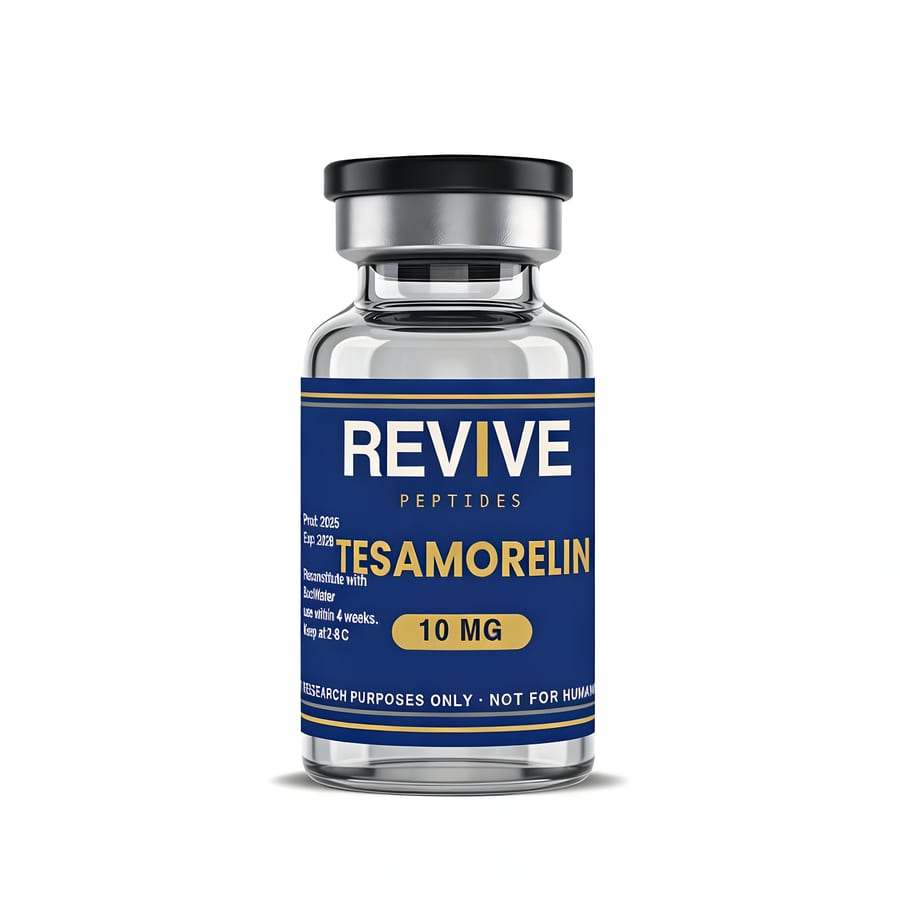
Why UAE Researchers Are Looking at Padel Through a Peptide Lens
Padel has not quietly crept into the UAE — it has arrived with the force of a smash into the back glass. From the courts at JBR Beach to the rooftop venues in Business Bay, from the clubs spreading across Dubai Marina to the fast-multiplying complexes in Abu Dhabi and Sharjah, padel has become the dominant social-sport of the UAE's professional class. World Padel Tour fixtures now draw serious crowds at Dubai venues, and membership waitlists at premium padel clubs in the Marina and Palm Jumeirah are measured in months, not days.
What makes padel interesting from a research perspective is its metabolic fingerprint. Unlike tennis, which involves longer rally structures and more variable intensity, padel produces extremely dense bouts of explosive lateral movement, overhead strikes, and sudden changes of direction — all within a confined 10m x 20m glass-walled court. Heart rate data from competitive padel typically shows sustained effort in the 75-85% of HRmax range, punctuated by short peaks above 90%. This places it squarely in the high-intensity interval category, alongside sports like squash and basketball.
Researchers studying body composition variables in explosive-interval sport populations in the UAE have a unique confounding layer that no European or North American institution has to contend with: the Gulf climate. Outdoor padel in Dubai in June operates at ambient temperatures of 38-42°C and humidity above 70%. Even indoor-climate-controlled venues carry residual thermal load on players moving between facilities. That environmental context changes how researchers must model substrate utilization, recovery timelines, and hormonal signaling in their study populations.
Into this landscape, tesamorelin — a 44-amino-acid GHRH analog that amplifies pulsatile growth hormone secretion — has emerged as one of the most discussed molecules in UAE research circles. The reasons are specific, and they are grounded in peer-reviewed evidence rather than speculation.
Tesamorelin: The GHRH Analog With the Deepest Clinical Record
There is no shortage of GHRH analogs in the research peptide space, but tesamorelin occupies a different tier. It is the only growth hormone-releasing hormone analog to have completed large-scale, placebo-controlled, peer-reviewed Phase III trials published in journals like the New England Journal of Medicine and JAMA. That clinical dataset is the primary reason researchers reach for tesamorelin when they want a GHRH analog whose mechanism is well characterized in the published literature.
The molecule itself is a synthetic analog of the endogenous 44-amino-acid GHRH(1-44) peptide, modified with a trans-3-hexenoic acid group that confers resistance to dipeptidyl peptidase-IV degradation. Tesamorelin acts on GHRH receptors in the anterior pituitary to stimulate pulsatile GH release, which in turn drives hepatic and peripheral IGF-1 production.
The landmark Falutz et al. (2007) trial published in the New England Journal of Medicine established tesamorelin's capacity to significantly reduce visceral adipose tissue in a rigorously controlled human study population over 26 weeks. The Stanley et al. (2014) JAMA trial extended this evidence base, demonstrating changes in visceral fat and triglyceride levels. The Falutz et al. (2010) continuation trial in the NEJM added long-term durability data, and the Stanley et al. (2019) Lancet HIV paper provided a 96-week longitudinal view of the same mechanistic pathway.
What these trials collectively give researchers is a well-described mechanism: GHRH receptor agonism drives pulsatile GH secretion, which modulates visceral adiposity and lipid metabolism. That mechanism is precisely what research groups working on body composition in metabolically active, explosive-sport populations find relevant as a starting point for their own laboratory work.
The Visceral Adiposity Variable in Explosive-Interval Sport Research
Body composition research in competitive sport contexts has historically focused on total body fat percentage and lean mass — blunt metrics that obscure meaningful metabolic variation. The more granular question that has driven peptide research interest in recent years is depot-specific: where is the fat, and how does its distribution correlate with metabolic flexibility, substrate switching, and hormonal signaling during high-intensity work?
Visceral adipose tissue is not inert. It is metabolically active, highly lipolytic during exercise, and a significant endocrine organ in its own right, secreting adipokines that influence insulin sensitivity, inflammatory tone, and hormonal feedback loops.
For researchers designing body composition studies around padel players in the UAE, the relevance is straightforward: padel demands explosive lateral acceleration and deceleration, rotational power, and rapid vertical loading. The metabolic efficiency of that movement pattern is plausibly modulated by visceral adiposity through its effects on insulin sensitivity and free fatty acid availability during the repeated sprint efforts that define competitive padel rallies. Researchers interested in modelling these relationships in a UAE cohort of active adults need a GHRH analog with a known effect size on visceral fat — and tesamorelin's clinical database provides that anchor.
This is the exact reason that among all the GHRH analogs available to researchers who order tesamorelin in Dubai, tesamorelin consistently leads in demand at REVIVE LAB UAE. It is not the only molecule in the class, but it is the one with the published data to support a rigorous research design.
5mg & 10mg vials. Same-day dispatch for Dubai orders before 4 PM. 24h delivery across Abu Dhabi, Sharjah, and all UAE emirates. Discreet packaging. Cash on delivery available.
Buy Tesamorelin UAE — Order from REVIVE LAB UAE
What the Published Trials Actually Show — A Researcher's Digest
Before building a research protocol around any peptide, serious researchers review the primary literature rather than secondary summaries. The tesamorelin evidence base is unusually dense for a research compound, and it is worth presenting the key trial architecture and outcomes clearly.
| Citation | Design | Duration | Primary Outcome | Key Finding |
|---|---|---|---|---|
| Falutz et al. 2007 NEJM | Randomized, double-blind, placebo-controlled | 26 weeks | Visceral adipose tissue (CT) | Significant VAT reduction vs placebo in HIV lipodystrophy population |
| Falutz et al. 2010 NEJM | Continuation trial (open-label extension) | 52 weeks total | Sustained VAT change; reversal on discontinuation | VAT reduction maintained with continued administration; partially reversed after washout |
| Stanley et al. 2014 JAMA | Randomized, double-blind, placebo-controlled | 26 weeks | Visceral fat, triglycerides | Visceral fat and fasting triglycerides reduced vs placebo; IGF-1 elevated |
| Stanley et al. 2019 Lancet HIV | Long-term extension | 96 weeks | Sustained metabolic outcomes | Long-term VAT reduction maintained; no new safety signals at 96 weeks |
What should a researcher take from this data when designing a body composition protocol for a UAE padel cohort? Several points are load-bearing. First, the effect on visceral fat is dose-regime specific — it appears with continued administration and attenuates after discontinuation, as the Falutz 2010 continuation data shows. This informs how researchers structure washout periods and longitudinal measurement windows. Second, the IGF-1 elevation observed in the Stanley 2014 trial is a secondary finding with implications for tissue remodelling research protocols.
Researchers should note that all four trials were conducted in HIV-associated lipodystrophy populations — a specific metabolic phenotype. Extrapolation to other research populations requires independent study design. The cited outcomes describe what was observed in the trial populations, not claims applicable to any other context.
The UAE Thermal Environment: An Under-Discussed Research Variable
There is a reason the most interesting padel body composition research in 2026 is being designed in the UAE rather than in Madrid or Buenos Aires, where the sport also thrives. The UAE summer thermal environment — sustained ambient heat above 40°C, extreme radiative load, and relative humidity that sits between 65% and 85% on a typical Dubai June morning — creates a research condition that is qualitatively different from temperate-climate sport science.
Endogenous growth hormone secretion is thermally sensitive. Heat stress activates hypothalamic-pituitary signaling pathways in complex ways, with hyperthermia documented to interact with GHRH receptor sensitivity and GH pulse amplitude in animal models. For researchers designing GHRH analog studies in the UAE, this thermal background is not just a logistical inconvenience — it is a genuine study variable that must be accounted for in protocol design and data interpretation.
Padel players at venues in the Marina, JBR, Palm Jumeirah, and Business Bay are typically moving between air-conditioned clubs and outdoor courts, or competing in well-cooled indoor courts but traveling to and from venues in ambient heat. The thermal challenge is real and consistent. Researchers studying visceral fat dynamics in this population face a methodological landscape that no European sport science trial has navigated — which is precisely why independent UAE-based research has value beyond replicating Western protocols.
A second thermal consideration is hydration and plasma volume. High ambient temperature + high-intensity interval exercise produces aggressive sweat rates in UAE populations. Plasma volume contraction affects GH secretory kinetics and IGF-1 bioavailability — both endpoints relevant to researchers using tesamorelin as a research tool. UAE-specific hydration protocols must be designed into any rigorous body composition study conducted here.
Researchers in Abu Dhabi working on indoor-court populations face a different thermal load than those in Sharjah, where mixed indoor-outdoor facilities are more common. This geographic granularity matters at the study design level and is something REVIVE LAB UAE's research desk is available to discuss with institutional buyers.
Sourcing Tesamorelin in UAE: The Practical Checklist for Researchers
The logistics of peptide procurement for research in the UAE are not trivial. Cold-chain integrity, documentation, and rapid availability all matter. Researchers working on time-sensitive protocols — particularly those aligned with competitive padel season schedules — cannot afford sourcing delays or cold-chain failures.
REVIVE LAB UAE is the UAE's dedicated B2B research peptide supplier. Here is what the procurement process looks like for tesamorelin specifically:
- Stock status: Tesamorelin 5mg and 10mg vials are maintained in continuous in-stock inventory at our Dubai facility. No pre-order delays.
- Same-day dispatch: Orders placed before 4 PM receive same-day dispatch from Dubai, with 24h delivery to all UAE emirates — Dubai, Abu Dhabi, Sharjah, Ajman, Ras Al Khaimah, Fujairah, and Umm Al Quwain.
- Discreet packaging: All shipments use plain outer packaging with no product identification visible externally. Cold-chain packs are included inside the sealed box.
- Payment options: Standard card and bank transfer, plus Binance Pay USDT TRC20 (with a 5% pre-pay discount). Cash on delivery is available for Dubai and Abu Dhabi addresses.
- Documentation: Research-grade certificates of analysis are available for all batch orders. Institutional invoicing for procurement departments is supported.
- Volume pricing: Bulk research orders attract tiered pricing. Contact the REVIVE LAB UAE research desk via WhatsApp for institutional quotes.
For researchers running multi-site protocols across Dubai, Abu Dhabi, and Sharjah simultaneously, REVIVE LAB UAE can coordinate split deliveries to multiple addresses under a single order. This removes the logistical friction that has historically made multi-site UAE research procurement cumbersome.
REVIVE LAB UAE. 5mg & 10mg vials. 24h delivery across the UAE. Discreet packaging. Cold-chain guaranteed. Research-use only.
Order Tesamorelin UAE — REVIVE LAB UAE
Tesamorelin vs Other GHRH Analogs: A Researcher's Comparison
Researchers new to the GHRH analog category sometimes ask why tesamorelin is the preferred starting compound for body composition research when alternatives exist. The answer is not that tesamorelin is the only molecule worth studying — it is that tesamorelin has the clinical publication record that other analogs lack. When a research protocol needs to anchor its mechanistic assumptions to peer-reviewed evidence, tesamorelin's four major trial publications give it a foundation no other GHRH research compound can match.
| Characteristic | Tesamorelin | Sermorelin | CJC-1295 |
|---|---|---|---|
| Peer-reviewed Phase III trials | Yes (4 major trials, NEJM, JAMA, Lancet HIV) | Limited human data | Very limited human data |
| Mechanism | GHRH receptor agonist, pulsatile GH stimulation | GHRH receptor agonist | GHRH receptor agonist (DAC-modified) |
| Primary research evidence base | Visceral adiposity, lipid metabolism, IGF-1 | GH secretory response (animal/small human studies) | Sustained GH elevation (animal models, small human studies) |
| Available at REVIVE LAB UAE | Yes — 5mg and 10mg vials, in stock | Yes | Yes |
The conclusion for researchers designing body composition studies in UAE padel populations is not complicated: start with tesamorelin if your protocol needs to anchor to published human evidence. Explore other GHRH analogs if your research question specifically concerns their distinct pharmacological profiles. REVIVE LAB UAE stocks all three for research purposes and can advise institutional buyers on lot availability and cold-chain logistics for multi-compound research orders.
FAQ
Where can I buy tesamorelin in UAE with same-day delivery?
REVIVE LAB UAE is the UAE's dedicated B2B research peptide supplier and stocks tesamorelin 5mg and 10mg vials in Dubai for immediate dispatch. Orders placed before 4 PM receive same-day dispatch, with 24h delivery across Dubai, Abu Dhabi, Sharjah, and all remaining UAE emirates. Order directly at revivelab.ae/buy-tesamorelin-uae/. Tesamorelin is supplied for research use only.
What vial sizes of tesamorelin does REVIVE LAB UAE carry?
REVIVE LAB UAE stocks tesamorelin in two formats: 5mg vials and 10mg vials. Both are maintained in cold-chain inventory at our Dubai facility. Researchers can order either size or a combination of both under a single order. Bulk research orders receive tiered pricing — contact us via WhatsApp for institutional quotes. All tesamorelin is supplied for research-use only and is not intended for human consumption.
Does REVIVE LAB UAE offer discreet packaging for tesamorelin orders in Dubai?
Yes. All tesamorelin shipments from REVIVE LAB UAE use plain, unmarked outer packaging with no product labeling, brand names, or compound identification visible externally. Cold-chain insulated packaging is sealed inside the outer box. Cash on delivery is available for Dubai and Abu Dhabi addresses. For research teams in Business Bay, JBR, Marina, or anywhere across the UAE, the same delivery standard applies with no variation.
- Falutz J, et al. Metabolic effects of a growth hormone-releasing factor in patients with HIV. N Engl J Med. 2007;357(23):2349–2360.
- Falutz J, et al. Effects of tesamorelin (TH9507), a growth hormone-releasing factor analog, in HIV-infected patients with excess abdominal fat: a pooled analysis of two multicenter, double-blind placebo-controlled phase 3 trials with safety extension data. N Engl J Med. 2010 (continuation trial data).
- Stanley TL, et al. Effect of tesamorelin on visceral fat and liver fat in HIV-infected patients with abdominal fat accumulation: a randomized clinical trial. JAMA. 2014;312(4):380–389.
- Stanley TL, et al. Long-term effects of tesamorelin on visceral adipose tissue and liver fat in HIV-infected patients with abdominal fat accumulation. Lancet HIV. 2019;6(12):e821–e830.
5mg & 10mg vials in stock. 24h delivery to Dubai, Abu Dhabi, Sharjah, and all UAE emirates. Discreet packaging. Cold-chain guaranteed. Cash on delivery available in Dubai. Research-use only.
Order Tesamorelin — REVIVE LAB UAE