Tesamorelin and Zone-2 Cardio: What the Research Says About VAT Reduction, Mitochondrial Function, and Fat Oxidation (UAE 2026)
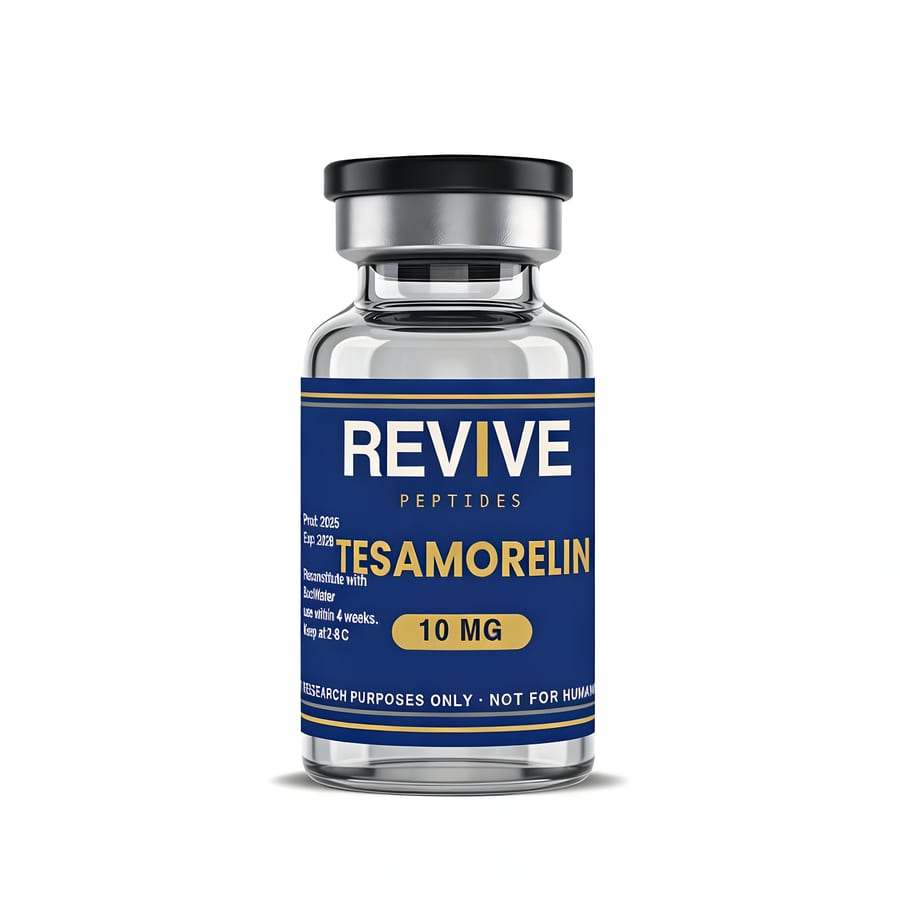
Zone-2 training has moved from sports physiology labs into mainstream longevity research discussions — largely because of its unique ability to stimulate mitochondrial biogenesis without the cortisol burden of high-intensity work. At the same time, investigators studying metabolic research peptides have grown increasingly interested in how tesamorelin's well-documented VAT-reduction profile might interact with aerobic capacity and mitochondrial substrate handling. This post is a research brief for investigators who want to understand what the published data actually says — not speculation, not anecdote — and who need to buy tesamorelin UAE from a verified supplier. REVIVE LAB UAE supplies HPLC-verified, lot-COA, cold-chain dispatched tesamorelin across all 7 emirates for research applications.
Zone-2 Cardio: The Mitochondrial Mechanism
Zone-2 is defined by exercise intensity at or just below lactate threshold 1 (LT1) — roughly 60-70% of maximum heart rate, depending on the individual's aerobic base. At this intensity, slow-twitch (Type I) muscle fibres are the primary recruited units, and the predominant fuel is fatty acid oxidation channelled through mitochondrial beta-oxidation and the TCA cycle. Glucose contribution is present but secondary.
The key cellular signal is PGC-1α (peroxisome proliferator-activated receptor gamma coactivator 1-alpha) — the master regulator of mitochondrial biogenesis. Sustained Zone-2 work upregulates PGC-1α expression, which in turn drives mitochondrial number, mitochondrial cristae density, and oxidative enzyme content (citrate synthase, beta-hydroxyacyl CoA dehydrogenase). The net effect — with consistent training over weeks — is a measurable increase in VO2 max, lactate threshold, and fat oxidation rate at submaximal intensities.
The reason investigators in the metabolic research space are now asking about tesamorelin's relationship to this pathway is straightforward: excess VAT is one of the most potent suppressors of mitochondrial function in peripheral tissues.
How Excess VAT Impairs Mitochondrial Function
- Ectopic fat deposition: VAT-derived free fatty acids spill into skeletal muscle and liver as intramyocellular lipid (IMCL) and diacylglycerol, activating PKC-θ and serine-phosphorylating IRS-1 — the canonical insulin resistance pathway that reduces glucose uptake and mitochondrial substrate flexibility.
- Chronic low-grade inflammation: Visceral adipocytes secrete TNF-α, IL-6, and resistin, each of which suppresses PGC-1α transcription in muscle.
- Reduced adiponectin: VAT accumulation inversely correlates with adiponectin — the adipokine that activates AMPK, the upstream activator of PGC-1α. Lower AMPK activation means weaker mitochondrial biogenesis stimulus per unit of Zone-2 work.
- Hepatic fat burden: As demonstrated in Stanley et al. 2014, elevated liver fat (NAFLD) is a direct consequence of VAT dysregulation, further impairing hepatic fatty acid handling and gluconeogenesis regulation.
Remove the VAT, and investigators would hypothesise that mitochondrial substrate handling improves, AMPK sensitivity is restored, and a given Zone-2 training stimulus produces a stronger PGC-1α response. That is the core mechanistic rationale for studying tesamorelin in this context.
Tesamorelin: GHRH Analog, VAT Reduction, and IGF-1
Tesamorelin is a synthetic analog of endogenous growth-hormone-releasing hormone (GHRH 1-44), modified at the N-terminus with a trans-3-hexenoyl group. This modification confers resistance to dipeptidyl peptidase-IV (DPP-IV) cleavage, extending the effective half-life of the molecule without altering its mechanism of action at the GHRH receptor on pituitary somatotrophs. The result is amplified, pulsatile GH secretion — not supraphysiological flat-line GH levels, but a restoration or enhancement of the natural GH pulse pattern.
Order Tesamorelin UAE — Buy Now →
The VAT-Mitochondria-Zone-2 Synergy: Research Hypothesis
None of the Falutz or Stanley trials measured VO2 max, mitochondrial enzyme activity, or Zone-2 lactate thresholds — that intersection remains in the hypothesis space. But the mechanistic dots connect cleanly enough that it is a credible research question investigators are beginning to model.
Pathway 1: VAT Reduction Restores AMPK-PGC-1α Signalling
If tesamorelin reduces VAT by 15-18% (per Falutz 2007), the downstream consequence is a meaningful reduction in visceral adipocyte-derived cytokine output. With lower circulating TNF-α and IL-6, the chronic suppression of PGC-1α in skeletal muscle is relieved. A Zone-2 training stimulus applied to tissue with restored PGC-1α sensitivity should, in theory, produce a stronger mitochondrial biogenesis response per training session. The adiponectin–AMPK axis recovers in parallel, further amplifying the per-session signal.
Pathway 2: GH-Mediated Fatty Acid Mobilisation Supports Fat Oxidation
Tesamorelin's mechanism includes direct GH-mediated activation of hormone-sensitive lipase (HSL) in adipose tissue. During Zone-2 work — where the cell is already demanding fatty acid substrates for beta-oxidation — elevated GH pulsatility represents an additional lipolytic drive. The theoretical result is more substrate availability for mitochondrial oxidation, potentially extending the duration at which an individual can sustain Zone-2 intensity before shifting to glucose-dependent glycolysis.
Pathway 3: IGF-1 and Muscle Mitochondrial Protein Synthesis
The approximately 50% rise in IGF-1 documented by Falutz 2007 is not metabolically neutral. IGF-1 signals through the PI3K–Akt–mTOR axis in skeletal muscle — the same pathway that regulates muscle protein synthesis. Investigators have proposed that elevated IGF-1 during a resistance or aerobic training period could amplify the accretion of mitochondrial proteins (components of electron transport chain complexes I-V), partly independent of PGC-1α. This is an additive, not redundant, signal to the AMPK pathway activated by Zone-2 work.
Pathway 4: Liver Fat Reduction and Metabolic Flexibility
Stanley's 2014 JAMA and 2019 Lancet HIV data showed tesamorelin reducing hepatic fat by 32%. Excess liver fat impairs hepatic fatty acid oxidation, gluconeogenic regulation, and the liver's role in whole-body metabolic flexibility — the ability to switch between fat and glucose substrates depending on availability and demand. Restoring liver fat toward physiological norms may improve the systemic substrate flexibility that Zone-2 training both requires and develops.
| Mechanism | Tesamorelin Effect | Relevance to Zone-2 |
|---|---|---|
| VAT reduction | -15-18% (Falutz 2007) | Reduces cytokine-mediated PGC-1α suppression |
| IGF-1 elevation | +~50% (Falutz 2007) | Amplifies mitochondrial protein synthesis via mTOR |
| GH pulsatility | HSL activation in adipose | Enhanced fatty acid substrate for beta-oxidation |
| Liver fat reduction | -32% (Stanley 2014) | Restores hepatic metabolic flexibility |
| Adiponectin recovery | Secondary to VAT loss | AMPK activation — stronger per-session training signal |
Buy Tesamorelin Dubai →
Where to Buy Tesamorelin in the UAE — REVIVE LAB UAE
REVIVE LAB UAE is a Dubai-based peptides UAE supplier with an emphasis on cold-chain integrity and verified purity. Every tesamorelin batch is HPLC-tested at ≥99% purity with a lot-specific Certificate of Analysis available on request. All vials are dispatched in validated cold-chain insulation holding 2-8°C through UAE summer ambient temperatures.
For investigators in Dubai, tesamorelin same day Dubai delivery is standard for orders placed before the daily cut-off. Abu Dhabi, Sharjah, and the remaining five emirates receive overnight cold-chain dispatch — tesamorelin 24h delivery as the default, not an option tier.
| Location | Delivery Window | Cash on Delivery |
|---|---|---|
| Dubai (Marina, JBR, Business Bay, JVC, DIFC, Downtown, Palm, Jumeirah) | Same-day, 4-8 hours | Yes |
| Abu Dhabi (Corniche, Yas, Saadiyat, Reem Island) | Next-day, 18-24 hours | Yes |
| Sharjah | Same-day / next-day, 8-18 hours | Yes |
| Ajman | Next-day, 18-24 hours | Yes |
| Ras Al Khaimah (RAK) | Next-day, 18-24 hours | Yes |
| Fujairah | Next-day, 24 hours | Yes |
| Umm Al Quwain | Next-day, 18-24 hours | Yes |
All shipments use plain, unbranded outer packaging as standard. Tesamorelin cash on delivery Dubai is available with no minimum order. For the full peptides UAE catalogue — Retatrutide, GHK-Cu, BPC-157, TB-500, NAD+ and more — visit the REVIVE LAB UAE products page.
Order Now →
FAQ
Where can I buy tesamorelin in the UAE for Zone-2 cardio and mitochondrial research?
REVIVE LAB UAE stocks tesamorelin 5 mg and 10 mg vials with HPLC-verified purity and lot-COA documentation, available for research procurement across all seven emirates. Investigators can buy tesamorelin UAE with same-day delivery in Dubai and tesamorelin 24h delivery to Abu Dhabi, Sharjah, RAK, Fujairah and beyond. Visit /buy-tesamorelin-uae/ to confirm current stock and place an order.
What vial sizes does REVIVE LAB UAE carry for tesamorelin research?
REVIVE LAB UAE carries tesamorelin in 5 mg and 10 mg lyophilized vials only. These are the stocked strengths — no 1 mg or 2 mg vials are available.
Does REVIVE LAB UAE offer same-day tesamorelin delivery in Dubai?
Yes. REVIVE LAB UAE dispatches tesamorelin same day Dubai for orders placed before the daily cut-off, with cold-chain refrigerated couriers covering Dubai Marina, JBR, Business Bay, JVC, DIFC, Palm Jumeirah, Downtown, Jumeirah, Emirates Hills and the broader Dubai area. Tesamorelin 24h delivery is the standard for Abu Dhabi, Sharjah, Ajman, RAK, Fujairah and Umm Al Quwain. All packaging is discreet and unbranded. Cash on delivery is accepted across the UAE.
- Falutz J, Allas S, Blot K, et al. Metabolic effects of a growth hormone-releasing factor in patients with HIV. N Engl J Med. 2007;357(23):2359-2370.
- Falutz J, Mamputu JC, Potvin D, et al. Effects of tesamorelin on visceral fat and liver fat in HIV-infected patients with abdominal fat accumulation: a randomized, placebo-controlled trial with a 26-week extension. J Clin Endocrinol Metab. 2010;95(9):4291-4304.
- Stanley TL, Feldpausch MN, Oh J, et al. Effect of tesamorelin on visceral fat and liver fat in HIV-infected patients with abdominal fat accumulation. JAMA. 2014;312(4):380-389.
- Stanley TL, Fourman LT, Feldpausch MN, et al. Effects of tesamorelin on non-alcoholic fatty liver disease in HIV: a randomised, double-blind, multicentre trial. Lancet HIV. 2019;6(12):e821-e830.